A Kourotrophos figure represents a woman holding a child in her arms or on her knees. This theme is well attested in the context of the Mediterranean civilizations, particularly in Cyprus, from the Early Bronze Age to the Hellenistic period. The term kourotrophos is the most frequently used term to designate this particular kind of representation in the classical Mediterranean civilizations.
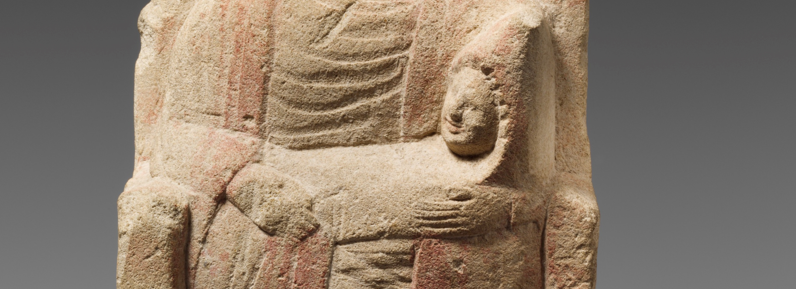
Seated Kourotrophoi are usually found in religious contexts, as votive offerings in sanctuaries, across Cyprus. However, several examples lack a certain site provenance and/or information. Seated limestone Cypriot kourotrophoi were produced in large numbers between the sixth century BC and the Hellenistic period (Beer, 1997; Hermary, 2012).
According to Hermary & Mertens (2014), the seated woman holding a child on her knees were given the name kourotrophoi after similar representations of women carrying a child and in reference to the divinities that, in Greece, watch over the health, growth and education of the young.
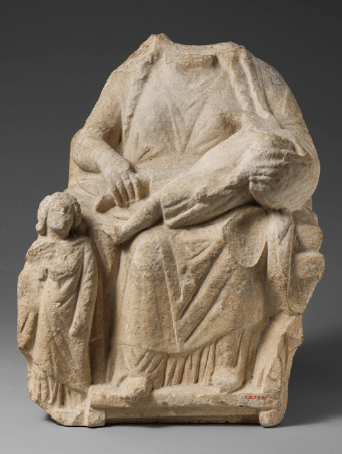
Cypriot seated kourotrophoi are veiled, holding on their lap an infant which is wrapped in swaddling clothes with the head covered by a hood. All kourotrophoi excavated in Cyprus never show the woman nursing the child. This is an indication that the sculptures do not necessarily depict the mortal mother of the child but rather a divinity taking the newborn under her protection. A seated kourotrophos from Ayios Photios sanctuary, clearly shows that the offerings of this type were dedications to deities, in this case, to Demeter (Hermary & Mertens 2014).
The majority of the known seated kourotrophoi have been excavated at Idalion and Golgoi but they have been also excavated in other sites such as from the sanctuary of Ayios Photios. Limestone figures from Idalion are now in Berlin, the British Museum, the Louvre, Turin and the Steiermärkisches Landesmuseum Joanneum. Figures from Golgoi are mostly in the Louvre.
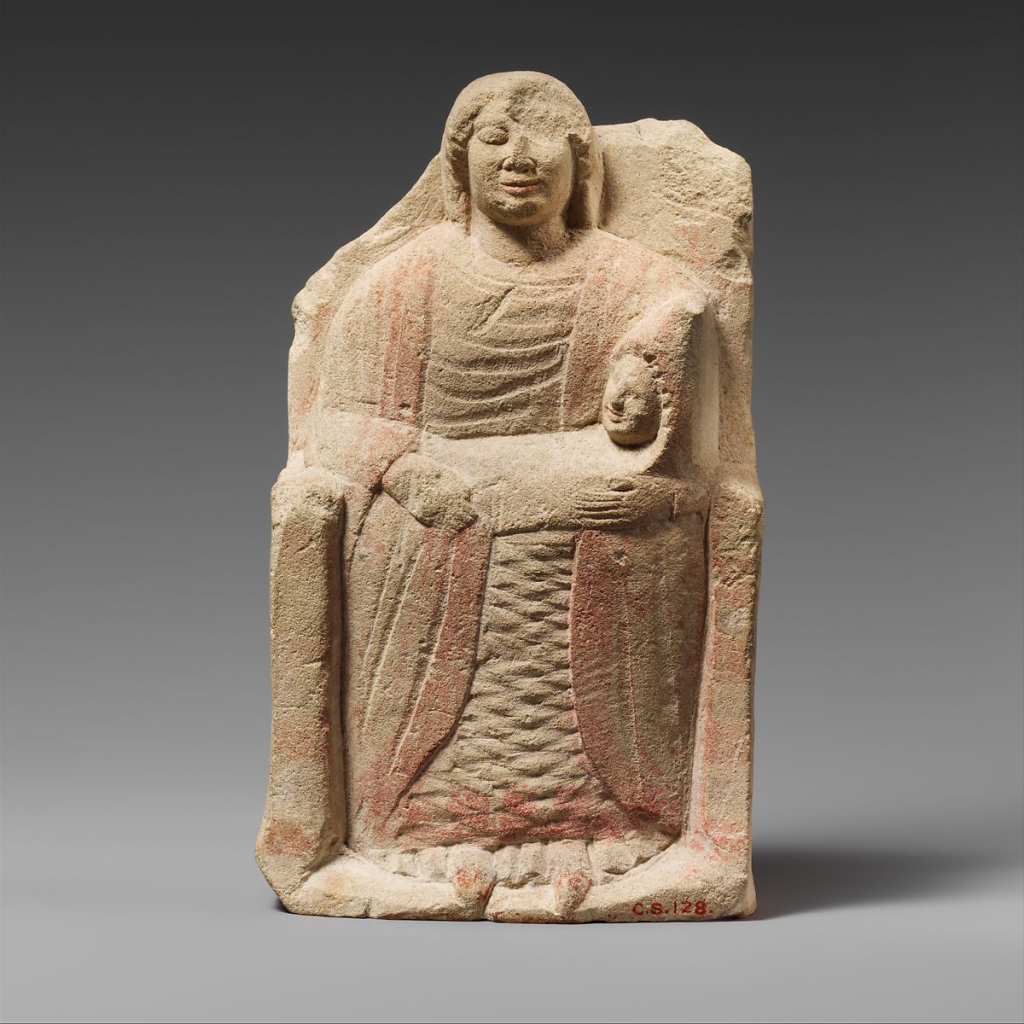
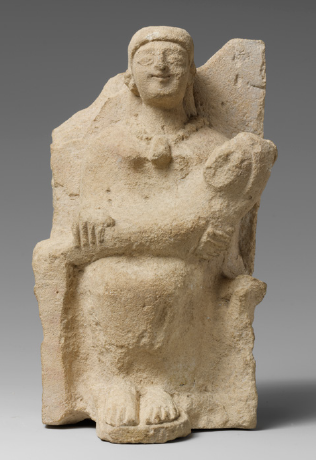
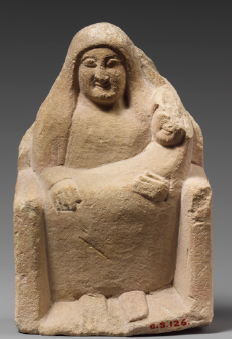
The three limestone figures depicted at the pictures, are seated on a high-backed throne. They were discovered at the sanctuary of the archaeological site of Golgoi-Agios Photios (today village of Athienou, Larnaca District). They are part of the Cesnola Collection at the Metropolitan Museum.
Research:
Cyprus Archaeology Team
Photos: https://www.metmuseum.org/art/collection/search/242079
References:
Hermany, A. (2012) The Cypriot Kourotrophoi: Remarks on the ‘Mother with Child Theme’, in ATHANASIA
Hermary, A., & Mertens, J. R. (2014). The Cesnola Collection of Cypriot Art: Stone Sculpture. The Metropolitan Museum of Art.
Beer Cecilia. The Kourotrophos temenos at Idalion (Cyprus). New evidence from the American Expedition 1971-1980. In:
Cahiers du Centre d’Etudes Chypriotes. Volume 27, 1997. Mélanges Olivier Masson. pp. 47-58;

 cyprus archaeology gazette