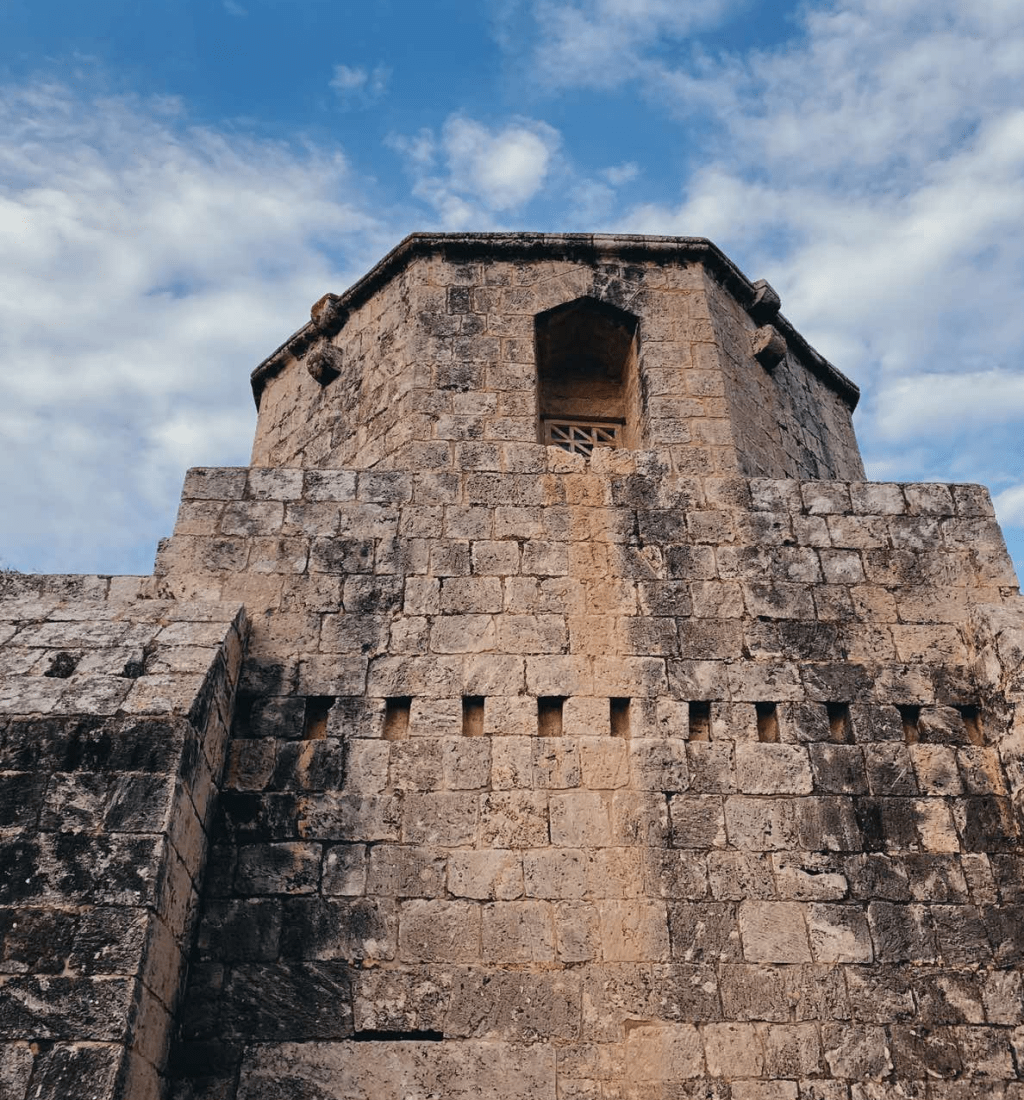
A small medieval chapel, dedicated to Ayios Mamas, is situated in Sotira, Ammochostos District, a fine example of the single, octagonal domed Frankish-Byzantine chapels in Cyprus.
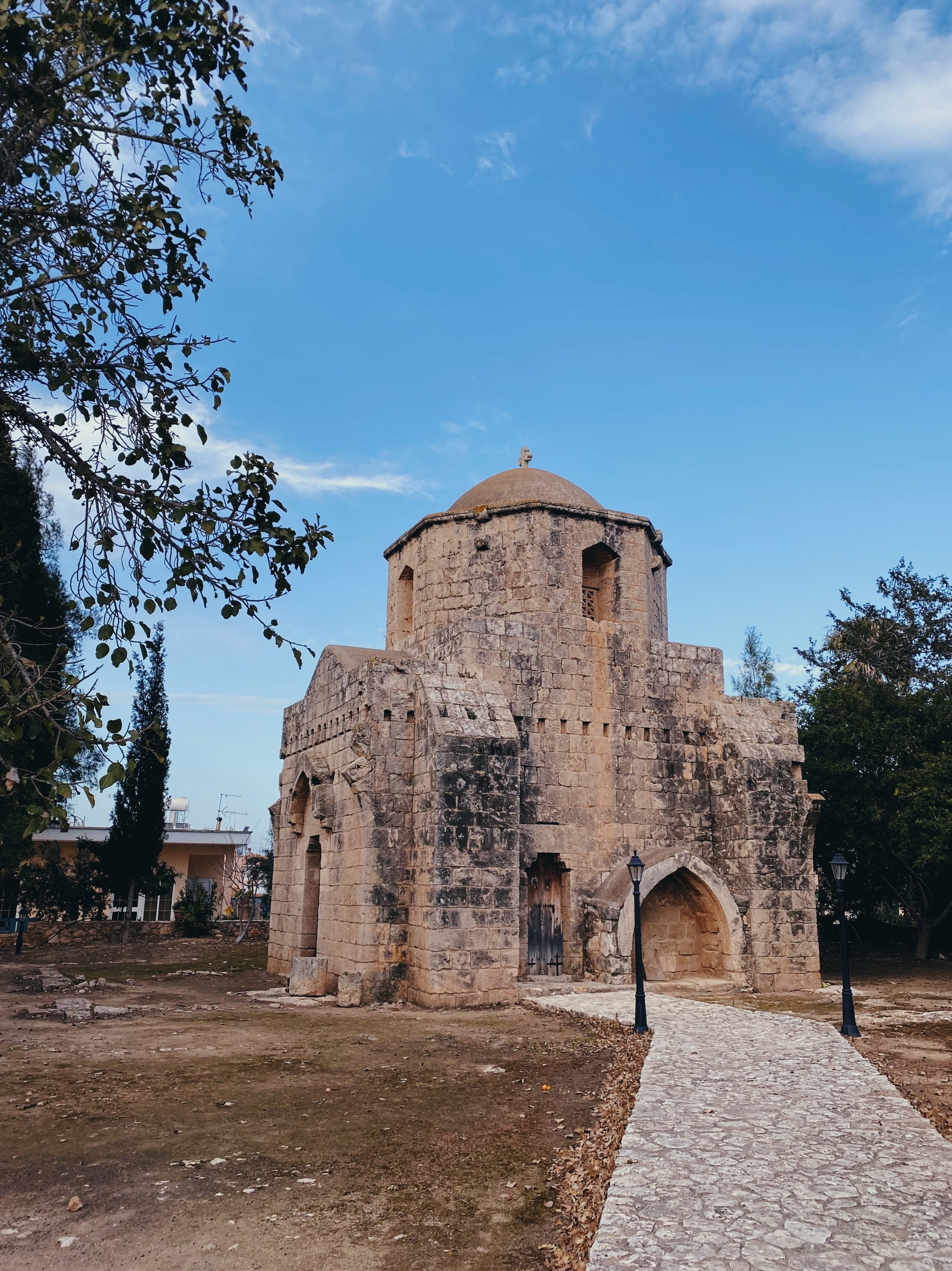
Ayios Mamas is situated in close distance to the Church of Metamorphosis, another Byzantine monument in Sotira, and approx. 10km to the south of Ammochostos city. The chapel was built by Famagustan masons and dates to the 16th century, following the Frankish-Byzantine architectural type. Sotira and the neighbouring villages (baliazzo di Sotira) by the 16th century, belonged to the ‘royal domain’.
It is a small dome-hall structure (ca. 10 x 4 meters), with a semicircular apse and an octagonal drum that follows a standardised model (Figure 2). Polygonal drums enjoyed moderate success in Cyprus, from the later medieval period onwards. This type exists at several monuments all over the island. Indicative examples are the drums at the church of Agios Nikolaos in Ammochostos, Panagia Chryseleousa in Lysos, Panagia Chryseleousa at Arediou, the mausoleum of Agios Herakleidios at Politiko, Agios Andronikos at Liopetri, Agia Kyriaki Chrysopolitissa at Kato Paphos, Agia Sophia, Paphos-Ktima, Transfiguration at Sotira Ammochostou, Stavros tou Missirikou and Tripiotis in Nicosia, and Panagia Chryseleousa at Emba.
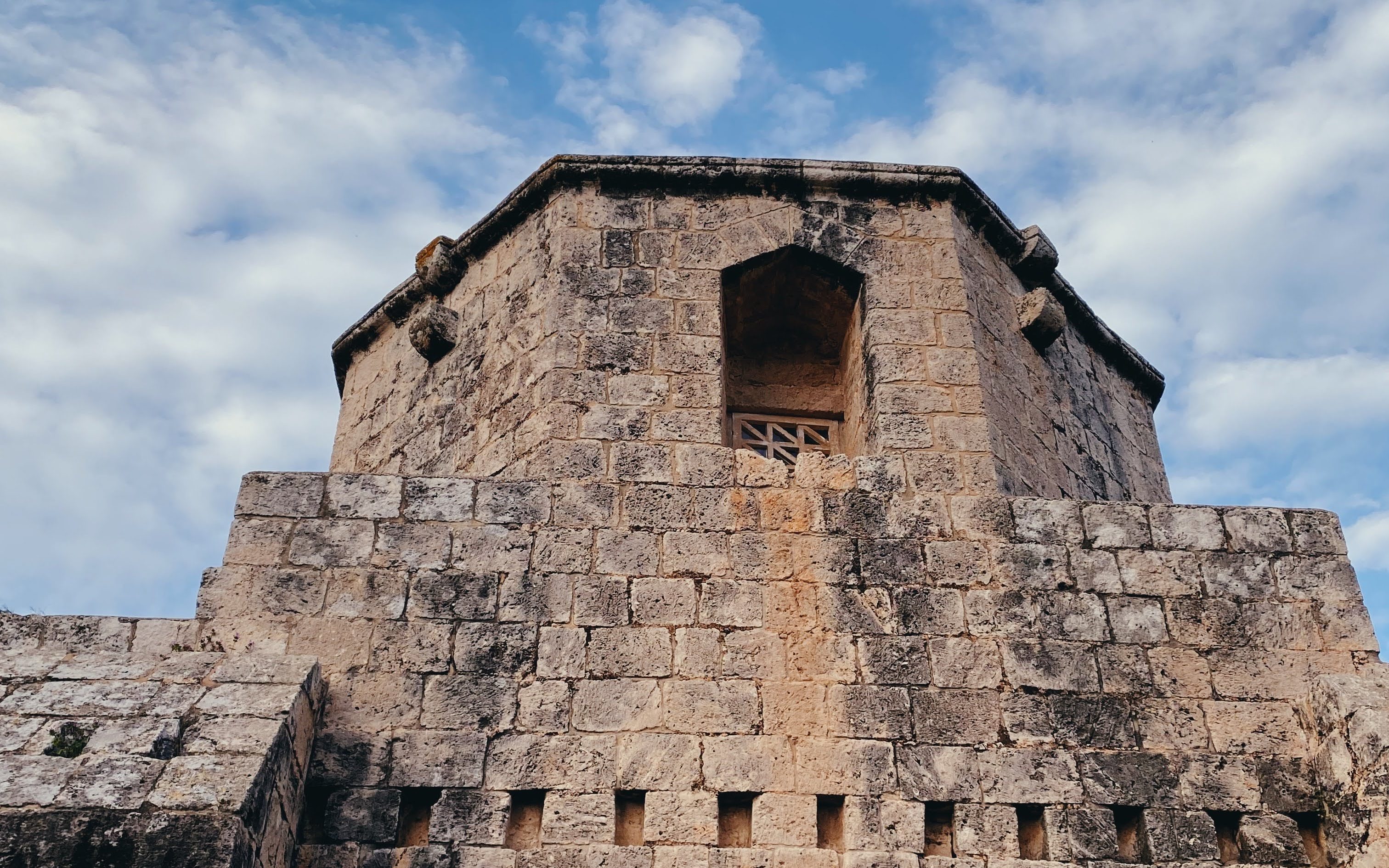
The chapel is entirely built in high-quality ashlar masonry (Figures 3-4) and it is a strictly centralized building, characterized by an austere and sophisticated appearance. Originally, it was a larger structure with a narthex and porticoes which surrounded three of its sides. These elements have been destroyed with only their foundations to be visible today. Ayios Mamas shares several similarities with the exterior of other Famagusta churches. The dome externally has an octagonal drum pierced by unframed ‘mitred’ windows. In the compact interior, the base of the dome is bracketed by barrel vaults on the east and west sides, following typical Cypriot fashion.
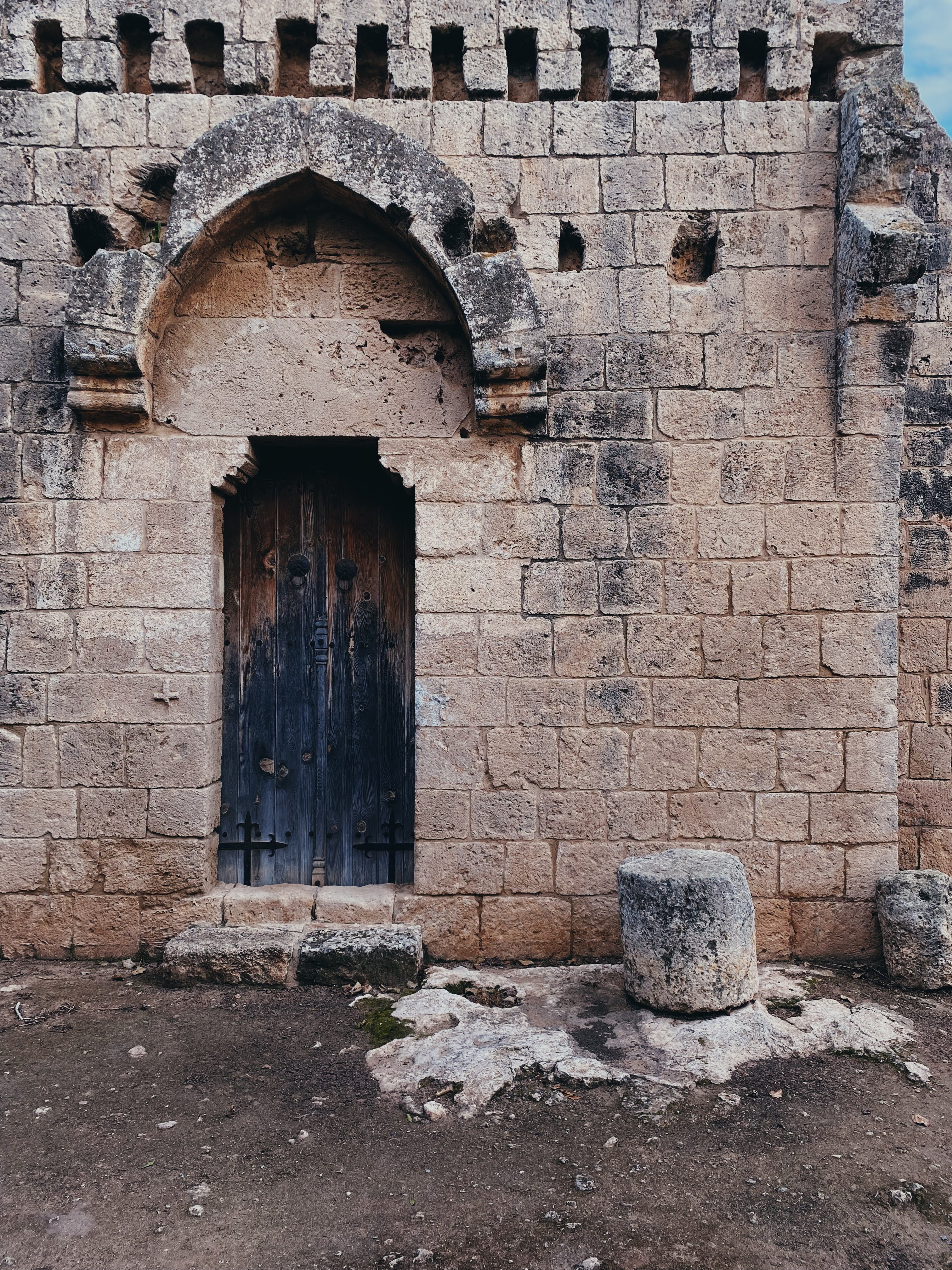
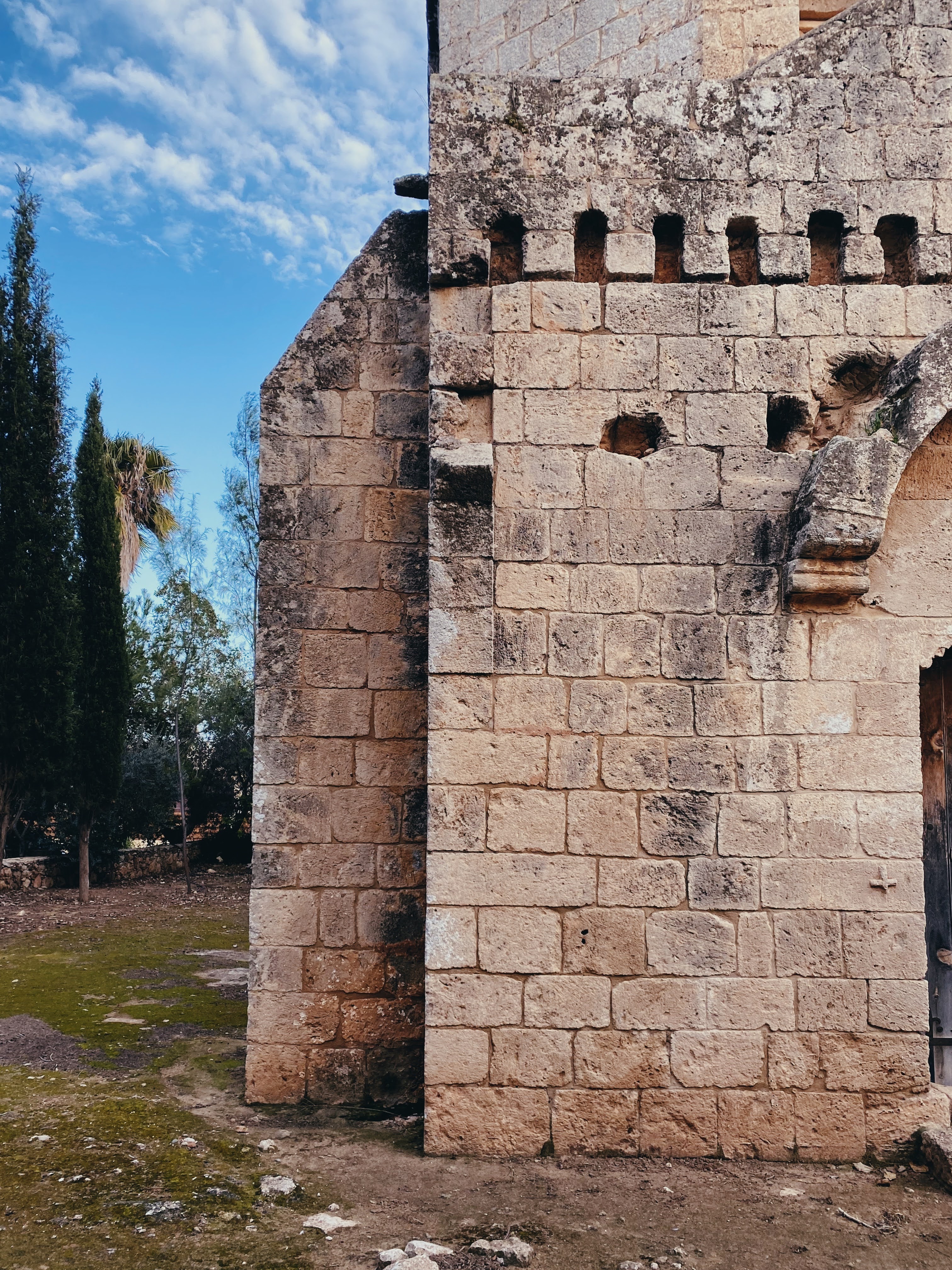
Figures 3-4. The ashlar masonry.
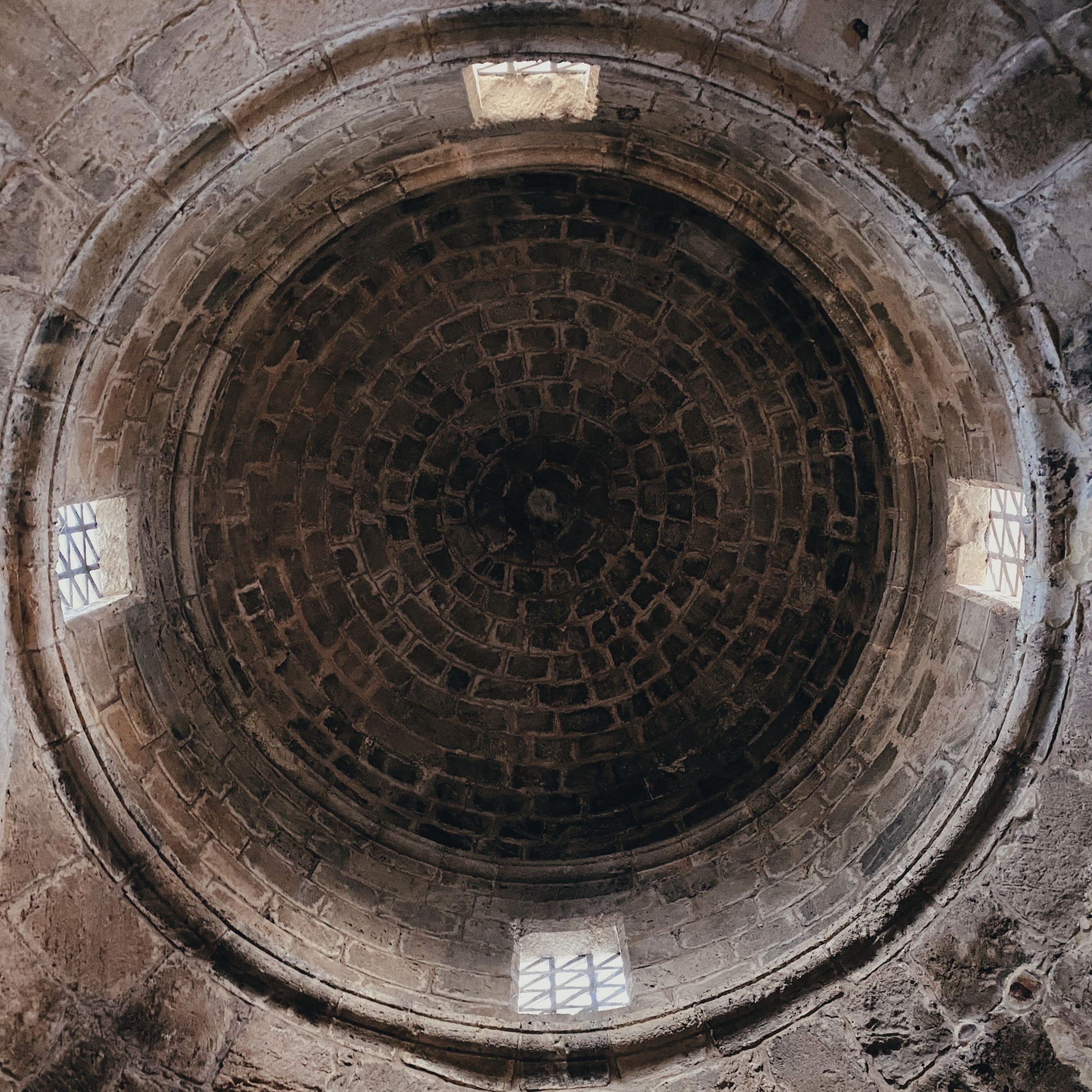
Figure 5. The dome.
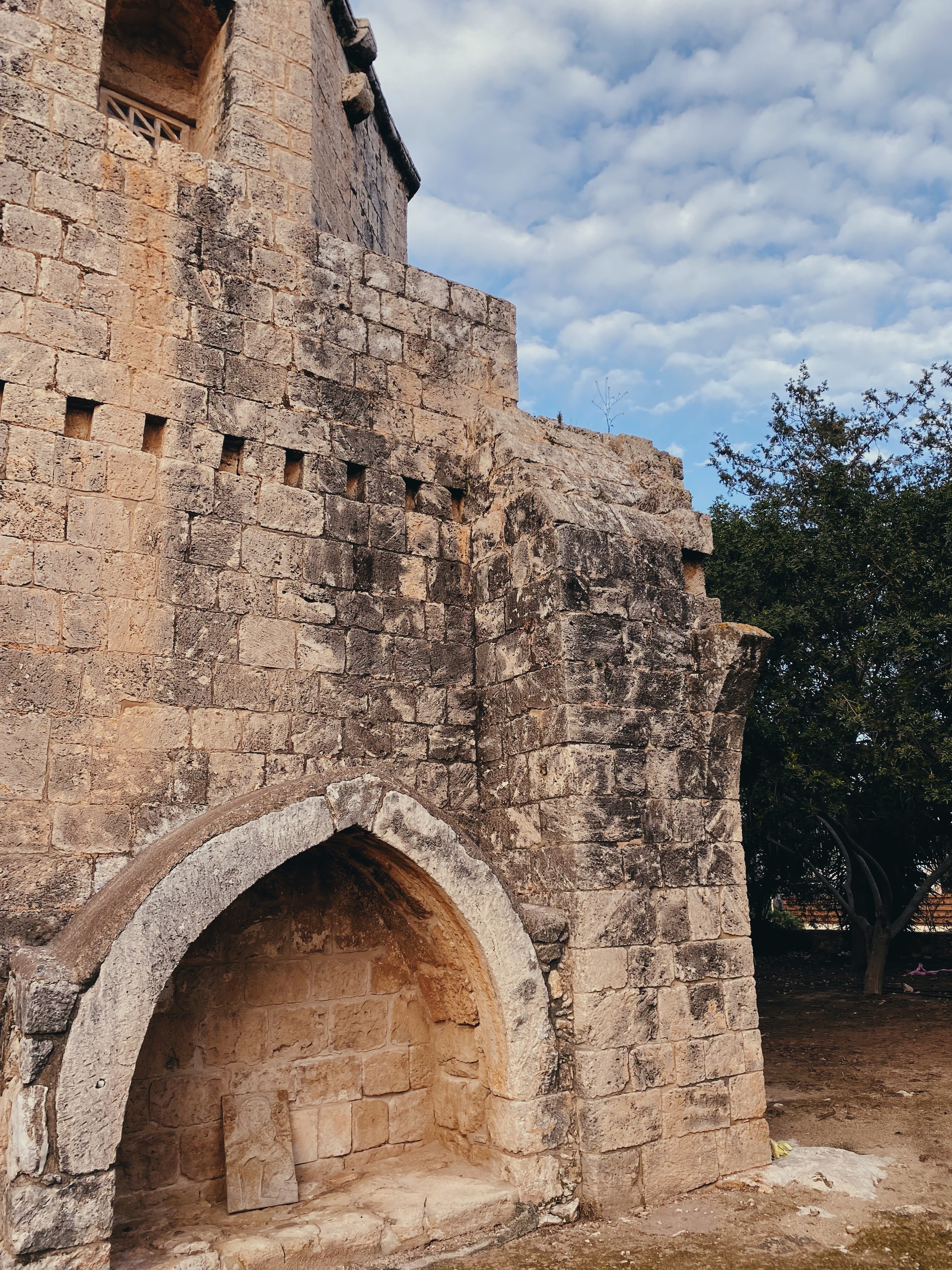
On the north and south walls there are two strong rectangular supports (greek: αντιρίδες) with a sloping top. On the south wall, on the outside, there is a wide blind arch attached to the east strut, which probably covered the tomb of the founder of the church (Figure 6). The church has three entrances (portals), one in the south wall, one in the west wall and one in the north wall. The northwester site of the chapel bears the the emblems of the owner, a standing lion and a fish.
The chapel was decorated in its interior with wall-paintings (frescoes) of fine art, dating to the 16ht c. AD, following the trends of post-Byzantine painting. When parts of the initial chapel destroyed, several of the interior frescoes have been destroyed as well. The apse vault is cover with a quarter sphere vault decorated with a wall-painting of the Virgin and the Christ, placed between between the archangels Michael and Gabriel. The walls on the right and left sides of windows of the apse are decorated with scenes from the Community of the Apostles. The lower part of the walls of the apse are decorated with depictions of clerics which have not fully survived. In the northern half of the eastern arch, above the step, the Ascension is depicted and in the southern half, the Pentecost. On the east wall, to the right and left of quarter sphere vault there are traces of the Annunciation of the Virgin and below, above the small clam of the Intention, there are remains of a biblical scene, perhaps of the Sacrifice of Abraham. On the south wall, below the scene of the Pentecost, an unidentified saint is preserved, while opposite the north wall, remains of the scene of the Three Holy Children In The Furn are preserved.
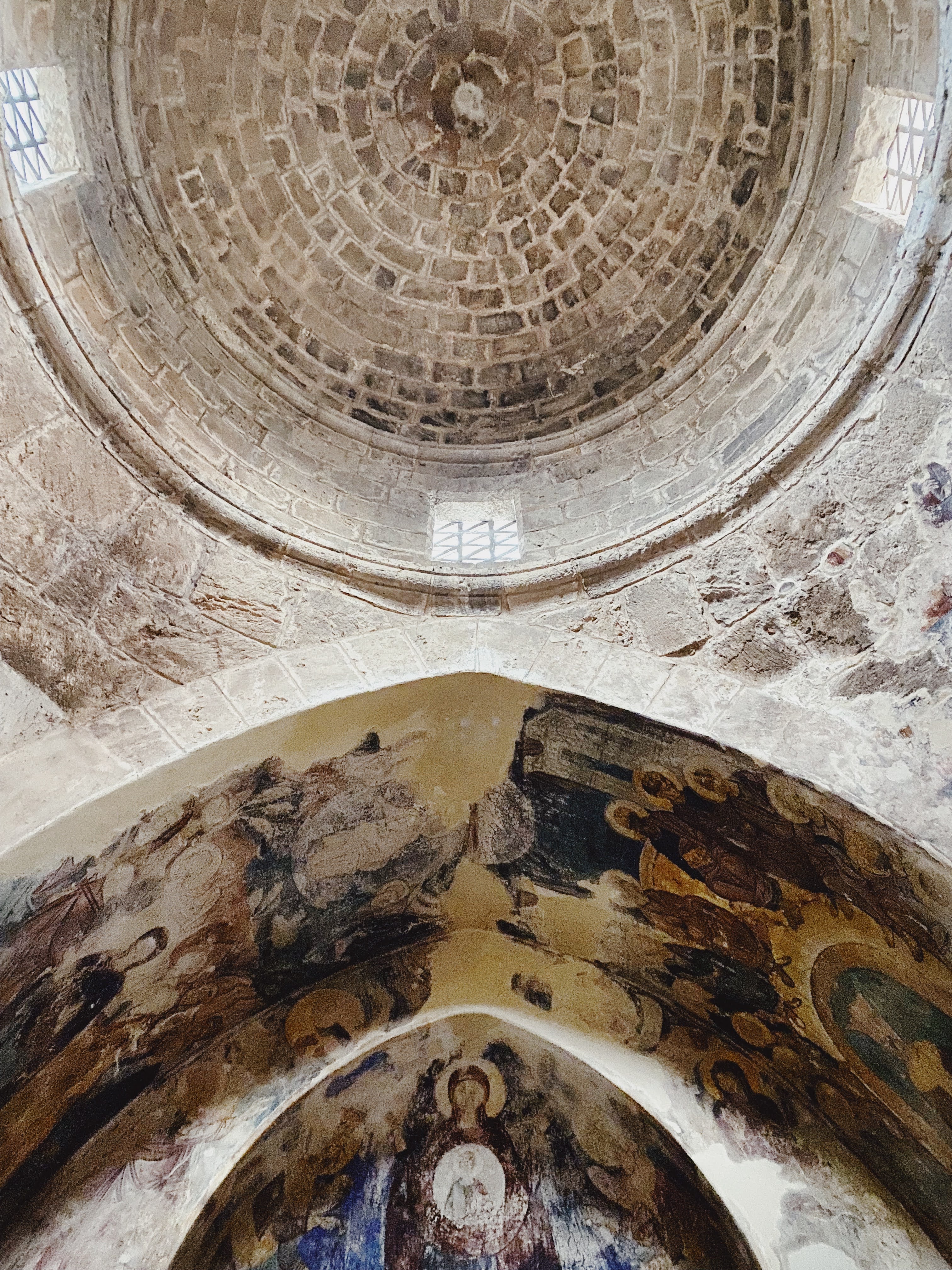
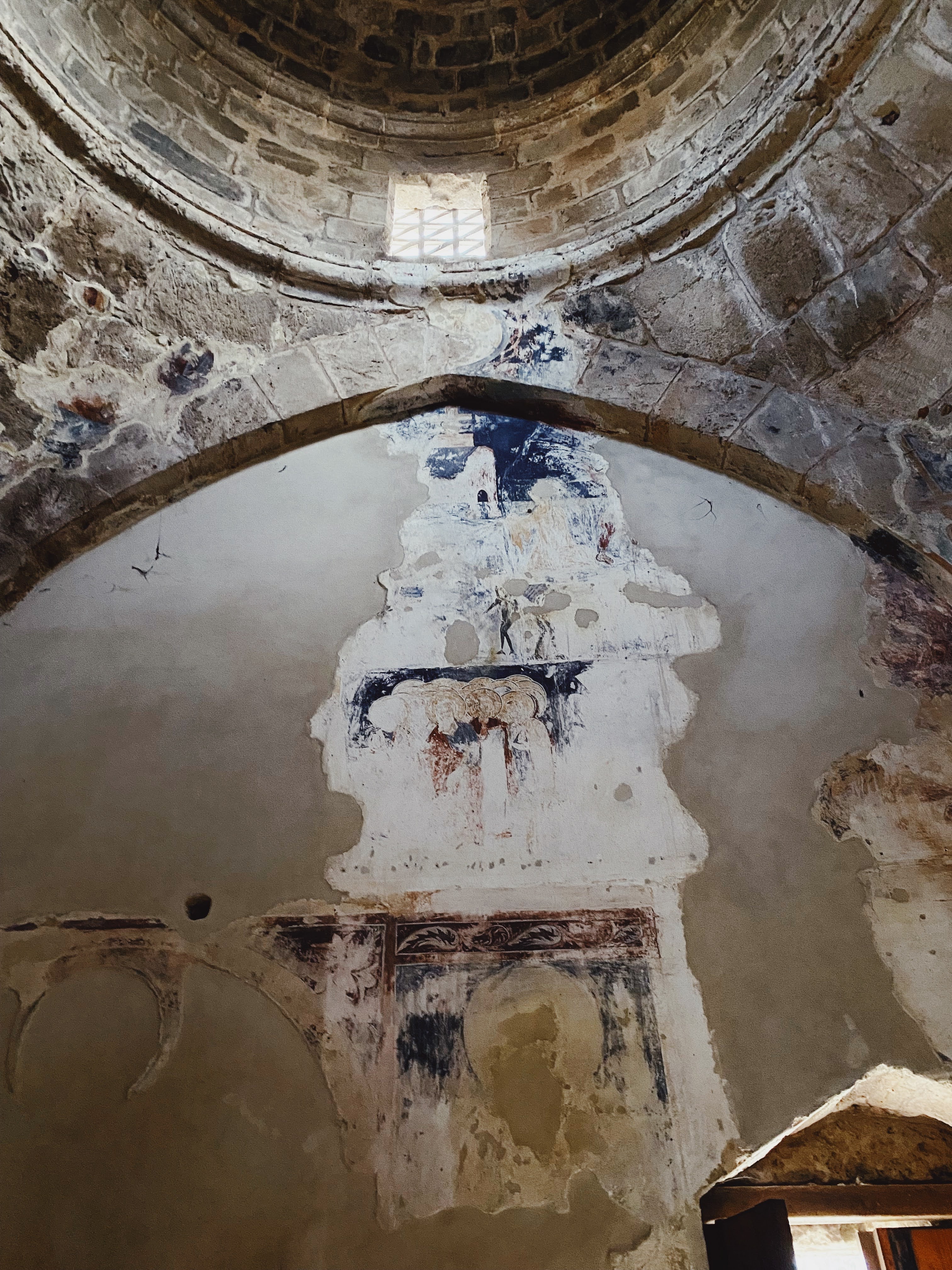
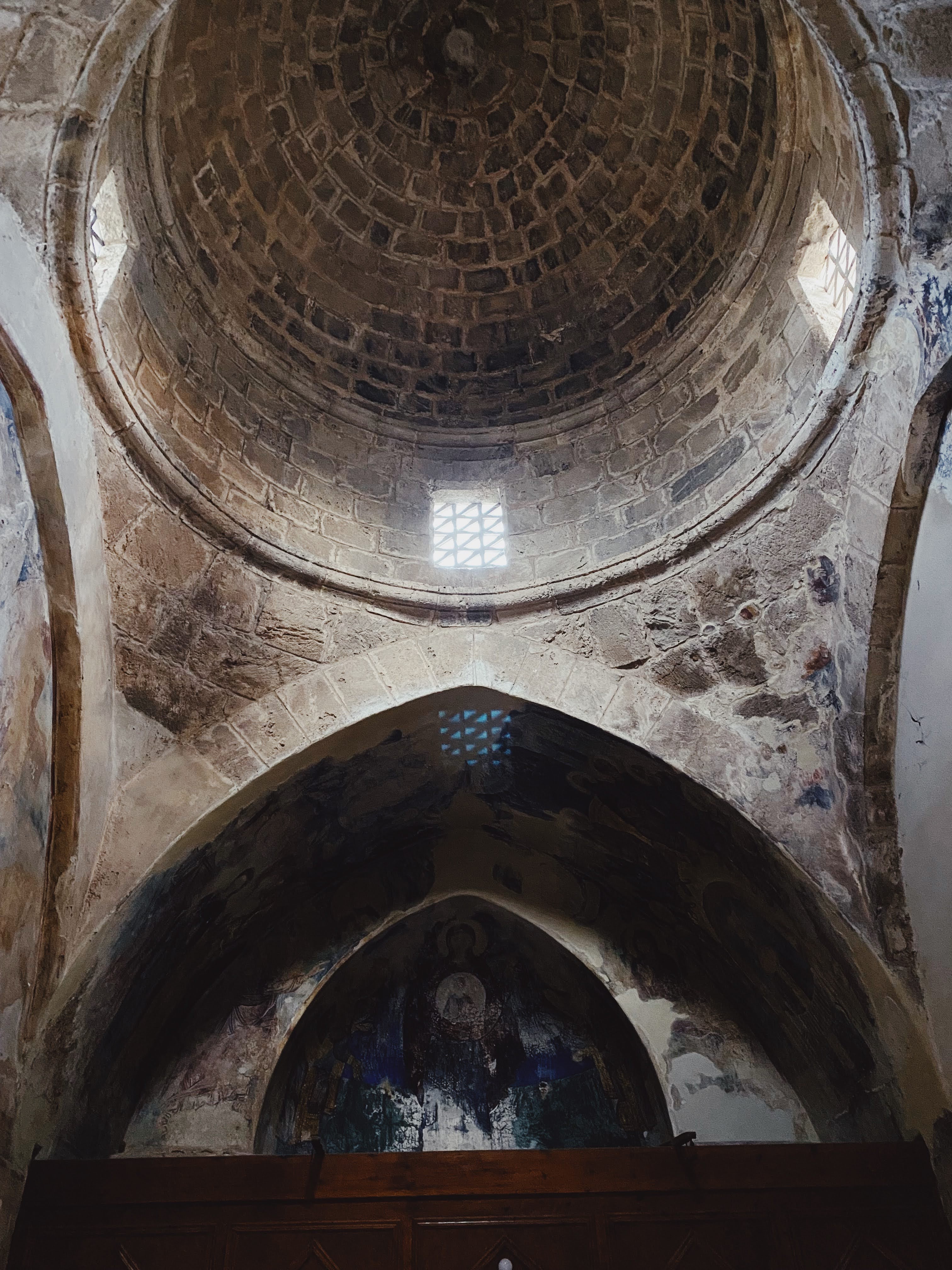
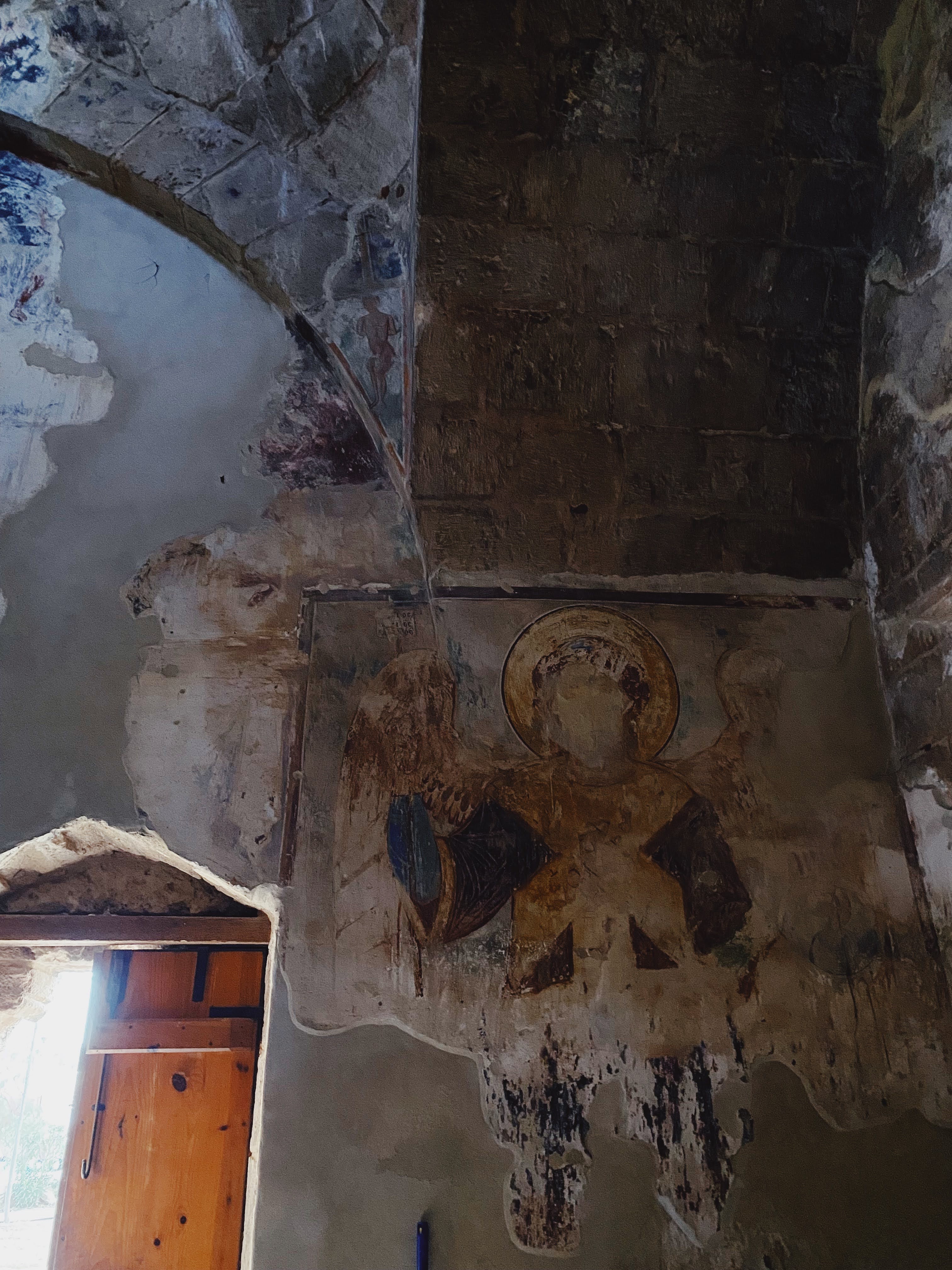
Figures 7-10. The wall-paintings.
Wall-painting remains of the Assumption of the Virgin are preserved in the drum of the central north arch. Below this scene, Saint George and two other unidentified saints, one of whom is an ascetic, are depicted. Parts of a red horse survive to the west of the north entrance. On the south wall, in the drum of the central arch, parts of the scene of the Second Advent are preserved. To the east of the south entrance, an unidentified saint is preserved and to the west, the remains of an archangel.
Research & Photos:
Cyprus Archaeology Team
References:
Olympios, M. 2014. The Shifting Mantle of Jerusalem: Ecclesiastical Architecture in Lusignan Famagusta. Famagusta, 75–142. https://doi.org/10.1484/M.MEDNEX-EB.4.00056
Kaffenberger, T. 2016. Tradition and identity the architecture of Greek churches in Cyprus (14th to 16th centuries). PhD Thesis, King’s College London.
Polignosi, [Accessed online: http://www.polignosi.com/cgibin/hweb?-A=37279&-V=limmata]

 cyprus archaeology gazette