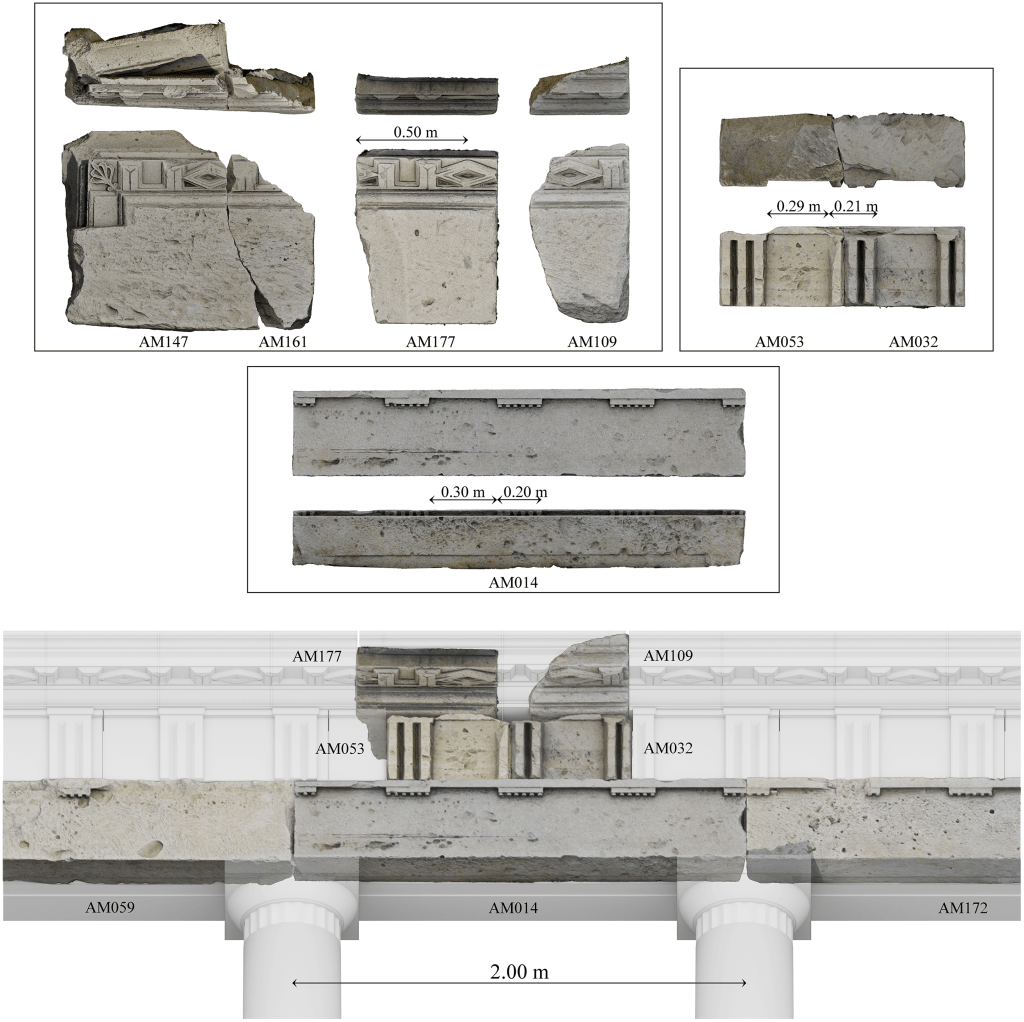
A new study (2025) by Anna Urszula Kordas (University of Warsaw) Szymon Popławski (Technische Universität Wien) sheds light on the exceptionally well‑preserved architectural decoration from the stoas surrounding the Agora of Amathous, one of the most important Hellenistic–Roman urban centers of Cyprus. Although the Agora was excavated between 1977 and 2003, its rich assemblage of limestone architectural elements had never been systematically studied until now. Researchers have completed a comprehensive analysis of the decorative stonework from the stoas surrounding the Agora of Amathous, revealing a sophisticated blend of local craftsmanship and Mediterranean influences that once framed the heart of this ancient city.
Amathous was a major port and cosmopolitan center with strong eastern Mediterranean connections. Ιts Agora is one of the few examples of Cypriot agoras preserving Hellenistic and Early Roman architectural decoration in local stone, making it a rare and invaluable case study. Compared to other Cypriot agoras (Nea Paphos, Kourion, Soloi), Amathous preserves far more complete architectural fragments, enabling detailed reconstruction. The Agora of Amathous, excavated between 1977 and 2003, has long been recognized for its well‑preserved urban layout. Yet its rich assemblage of architectural decoration—remarkably intact compared to other Cypriot sites—had never been fully examined. The new research finally brings these fragments into focus, identifying which decorative elements belonged to each stoa and reconstructing the aesthetic program of the public square.
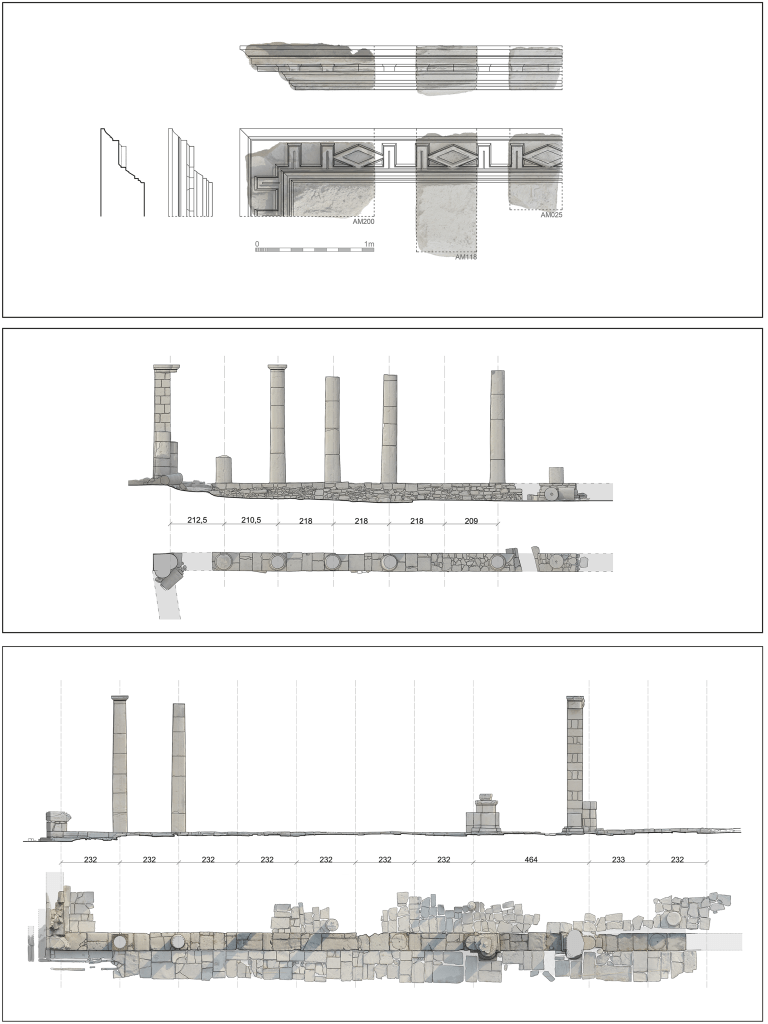
Orthogonal renderings prepared based on the photogrammetric documentation (top to bottom): reconstruction of the decoration set: elements of cornice with flat grooved modillions and diamond motifs; Eastern Portico of the colonnade of the L-shaped Stoa; fragment of the colonnade of the Western Stoa. (S. Popławski and A. Kordas, with the use of 3D models prepared by M. Mackiewicz and B. Wojciechowski. Courtesy of the Department of Antiquities, Cyprus.)
Using detailed documentation and analysis, the researchers assigned decorative fragments to the Western Stoa, the L‑shaped Stoa, and the Southern Stoa. Their findings reveal:
– The Western Stoa featured a Doric frieze with triglyphs and metopes, paired with distinctive flat‑grooved modillions.
– The L‑shaped Stoa replaced earlier Hellenistic structures and displayed a consistent decorative rhythm across its long colonnades.
– The Southern Stoa, originally Hellenistic, underwent Roman‑period modifications and served as a key access point to the nearby baths.
These reconstructions offer the most complete picture to date of how the Agora’s colonnades once framed civic life.
According to the authors, ”the reconstructed decoration of the stoas in the Agora of Amathous reveals a coherent ornamental style across all porticoes, reflecting a seemingly local preference for the Doric order – shaped during Ptolemaic rule and amalgamated with cornices with modillions in the Alexandrian tradition. Notably, this particular combination has not been previously attested. Furthermore, this material represents a significant contribution to our understanding of architectural trends in Cyprus, where the fragmentary preservation of structures – combined with the limited state of research – continues to constrain our knowledge of public buildings, particularly from the Hellenistic and Early Roman periods.”
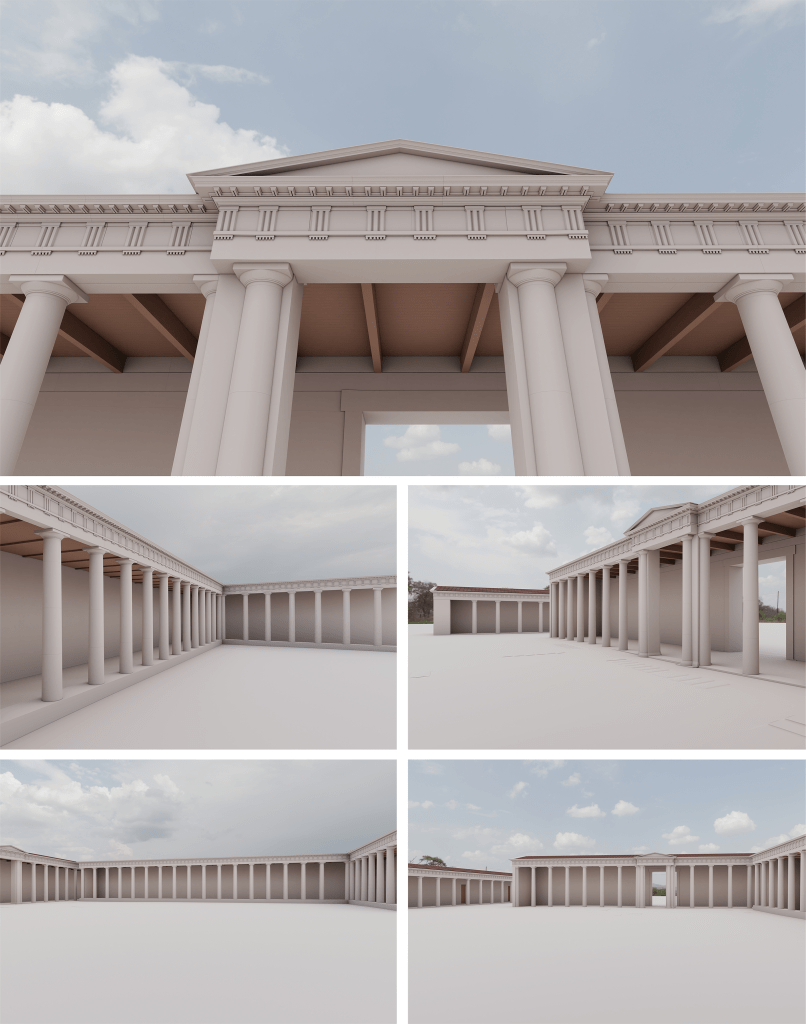
The Agora of Amathous now stands out as the only site on the island preserving such extensive Hellenistic and Early Roman architectural decoration in local limestone. Scholars say the findings will serve as a crucial reference point for future studies of Cypriot public architecture and its connections to the wider Mediterranean world. The research not only enriches our understanding of Amathous but also underscores Cyprus’s role as a dynamic participant in ancient architectural innovation.
This study marks an important advance in the understanding of Cypriot architectural history, offering a thorough photogrammetric record and analysis of the decorative stonework from the Agora of Amathous. The site is exceptional among Cypriot agoras for the remarkable preservation of its architectural ornamentation and for its distinctive blend of Hellenistic and Early Roman decorative styles, all executed in local limestone. Although a wealth of architectural fragments survives, they had never been formally published, nor had scholars attempted to reconstruct the architectural orders of the individual stoas. By employing fast and precise photogrammetric techniques to generate accurate 3D models, the researchers were able to compare elements at true scale and draw reliable conclusions about how they relate to one another. This method also shed light on ancient stone‑working practices and the tools involved.

 cyprus archaeology gazette