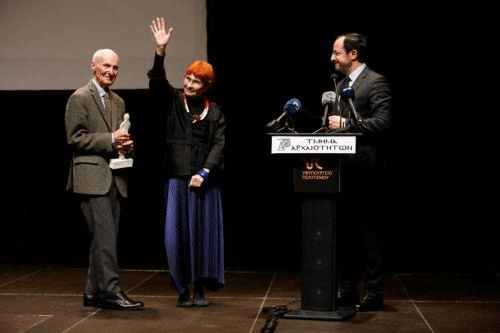
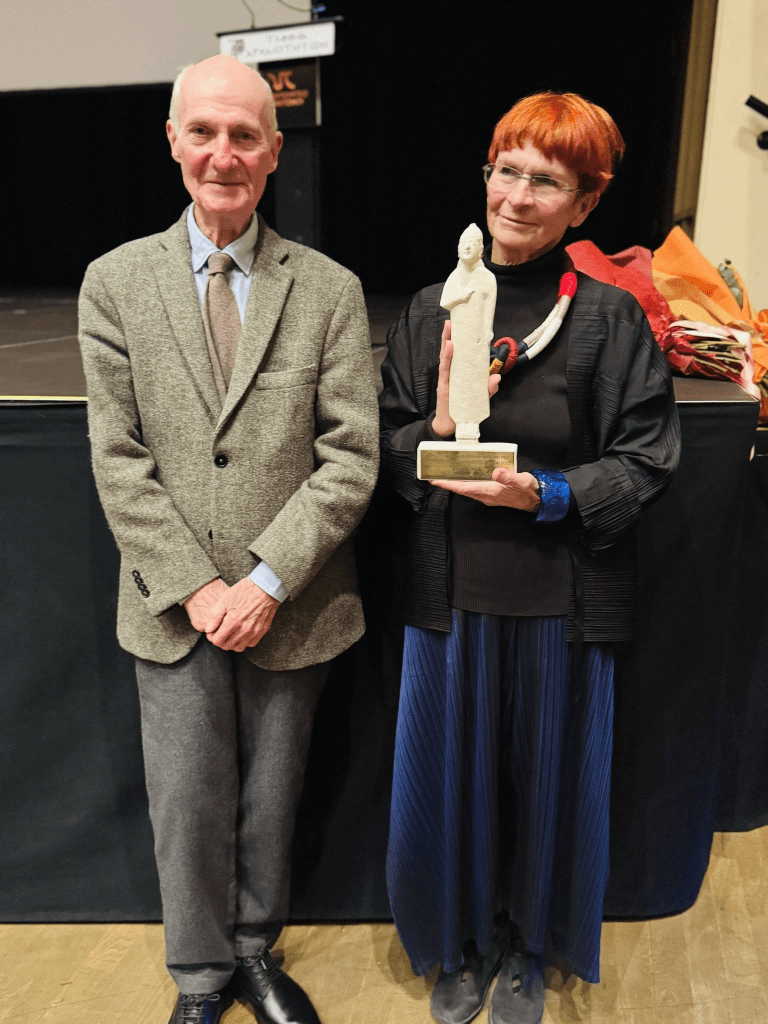
Archaeologists Alain Le Brun and Odile Daune-Le Brun awarded the ‘Preservation and Promotion of the Archaeological Heritage’ prize for their half-century archaeological research on Cyprus. The two archaeologist have served Cypriot Archaeology with passion, integrity and dedication for more than 50 years.
The ceremony, organized by the Deputy Ministry of Culture took place at Pallas Theatre in Nicosia on the 12th of January. The event was part of the celebration for the 90th anniversary of the Department of Antiquities and marked the revival of the Award institution after 14 years, by the Deputy Minister of Culture, Dr. Vasiliki Kassianidou.
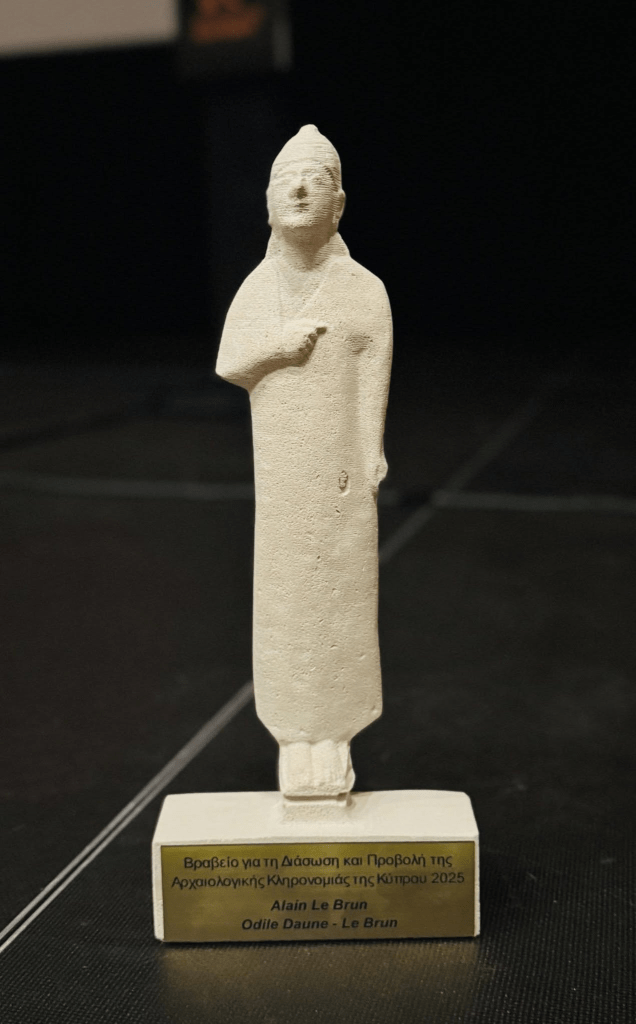
Alain Le Brun and Odile Daune-Le Brun recieved the award by the the President of the Republic of Cyprus, Nicos Christodoulides. The President, in his speech, highlighted that this award is ”minimal token of gratitude” for the long-term and valuable contribution to Cypriot Archaeology, adding also that ” today’s award underlines simultaneously Cyprus’s close and enduring relationship with France, a country that supported and promoted Cyprus’s cultural heritage for many decades.”
Dr Maria Iacovou, Professor Emeritus at the University of Cyprus and chair of the awards committee, read the rationale for the award. She said “the scientific work of the candidates and their continuous presence in Cyprus’s archaeological field exceeds half a century and dates before the Turkish invasion of 1974.”
As part of the ceremony, a short film was screened—produced by the Department of Antiquities and directed by Danae Stylianou—highlighting the life and work of the honorees.
The Work of Alain Le Brun and Odile Daune-Le Brun
The two archaeologists came to Cyprus before the Turkish invasion in the island, in 1974, excavating the Neolithic site of Kastrós at Apostolos Andreas – today occupied and inaccessible to research—which has since been destroyed by the Turkish occupying army.
Alain Le Brun and Odile Daune-Le Brun after their displacment of their research area at the far end of Karpasia, not only did not abandon Cyprus but they also preserved, studied, and published archaeological data of primary importance from the Neolithic site of Kastrós at Apostolos Andreas.
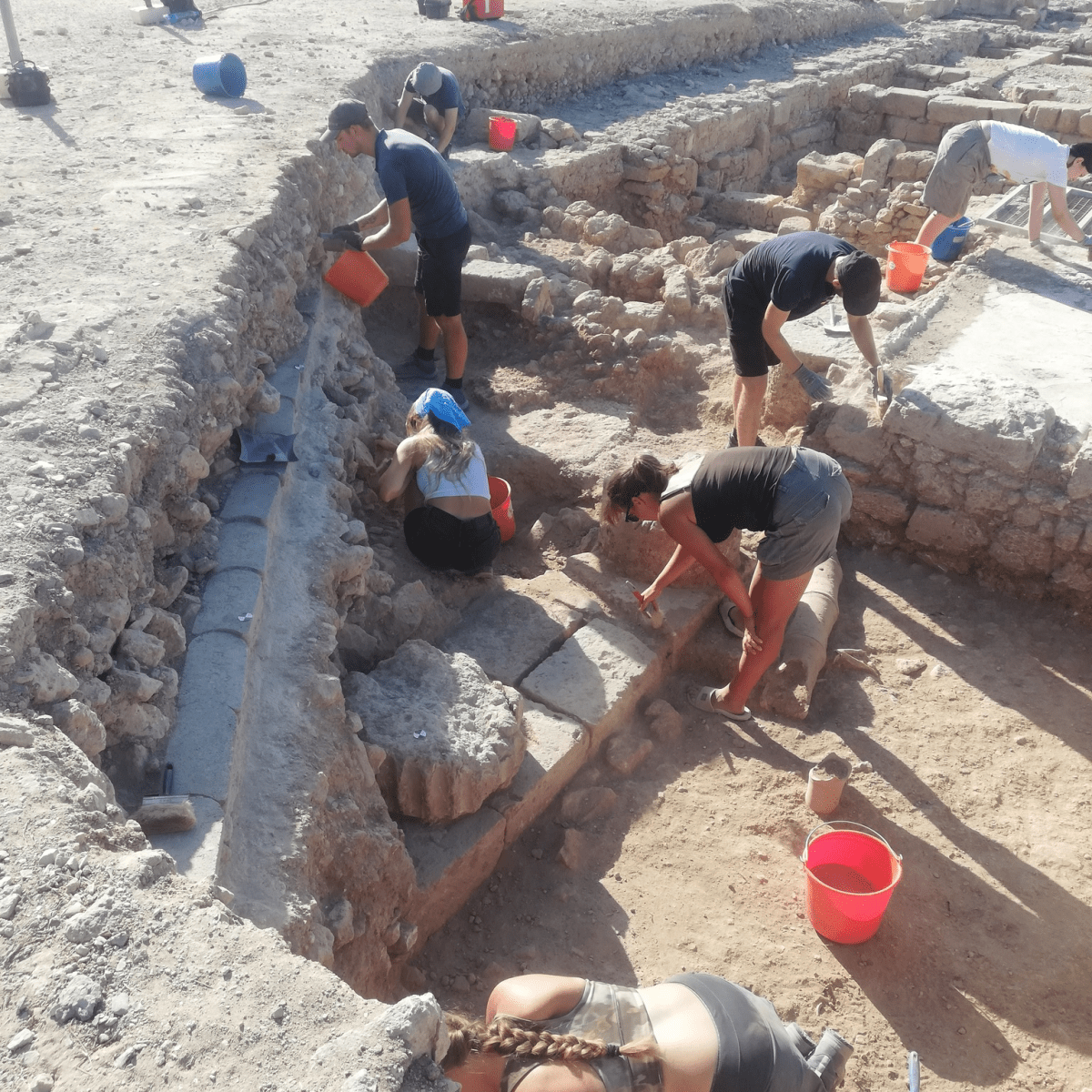
Since 1976 they lead a large-scale archaeological mission at the Neolithic Settlement of Choirokitia, one of the most important prehistoric sites in the eastern Mediterranean. The archaeological remains and the finds from the excavations have thrown much light on the evolution of human society in this key region. Working in close collaboration with the Department of Antiquities, they played a decisive role in the management plan for the enhancement of the archaeological site, spearheaded the creation of the experimental Neolithic houses and the design of educational programmes, and their contribution was equally crucial to the inscription of Choirokoitia as a UNESCO World Heritage Site.
As Dr Maria Iacovou highlighted in her speech during the ceremony, their significant contribution to Cypriot Archaeology is acknowledge worldwide as ”they have strengthened Cypriot archaeology and, at the same time, succeeded in establishing the island’s earliest prehistory as a distinct field of study, essential for interpreting the long course of Mediterranean prehistory.”
Sources and Images:
– Department of Antiquities
– Cyprus Mail
-Κυβερνητική Πύλη, www.gov.cy

 cyprus archaeology gazette