
about.
The story of Cyprus Archaeology Gazette goes back to 2015. It started as ‘Cyprus Archaeology Team’ (CAT). A group inspired by Cypriot archaeology, history and culture. CAT acted as a channel of knowledge, interests, actions, views and experiences on Cypriot Archaeology.
In 2025, in a process of maturing and evolving, both as individuals and as a brand, ‘Cyprus Archaeology GAZETTE’ emerged as the proud successor. Our aim is to craft original Cypriot Archaeology content and promote the island’s archaeology, history and culture. We aim to bring archaeology in the frontline, continuing our tradition of channeling archaeological information and knowledge.
Cyprus Archaeology GAZETTE is a place where the past meets the present. It is for the curious, the explorers and the creative minds.
the émvlima.
Inspired by therianthropic figures on two vessels from Bellapais Vounous, from Tomb 91 and Tomb 160A, dating to the Early Cypriot and from triangle decorative patterns seen in architecture and funerary elements of the Archaic and the Classical period.
Our logo embodies our values, passion and vision, all emerging from Cyprus Archaeology.
our goal.
A magazino on Cyprus Archaeology. Crafting original and fresh stories based on the island’s archaeology and people.
the creators.
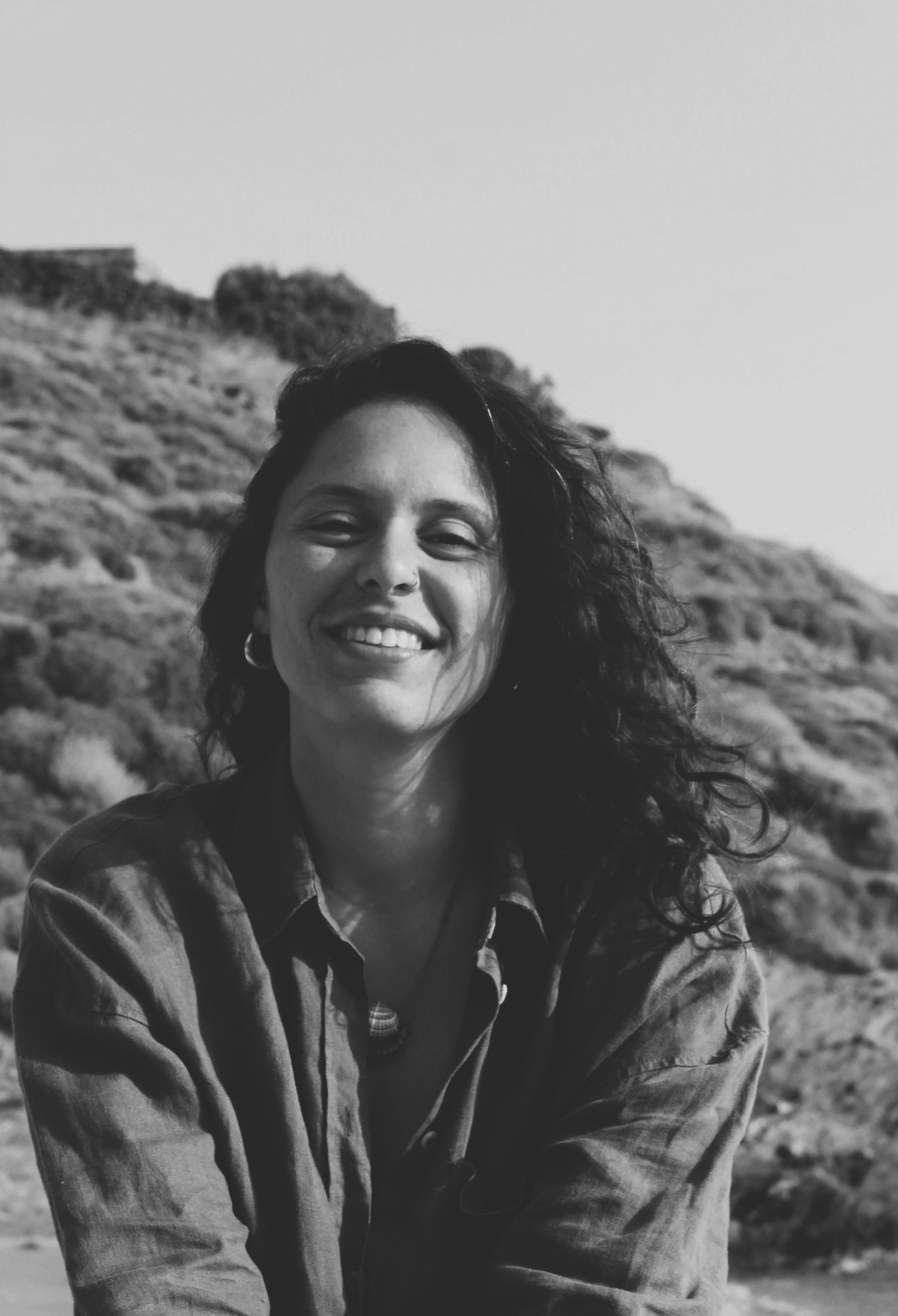
We are Grigoria and Thea, two Cypriot archaeologists and researchers, passionate with the archaeology of our homeland.
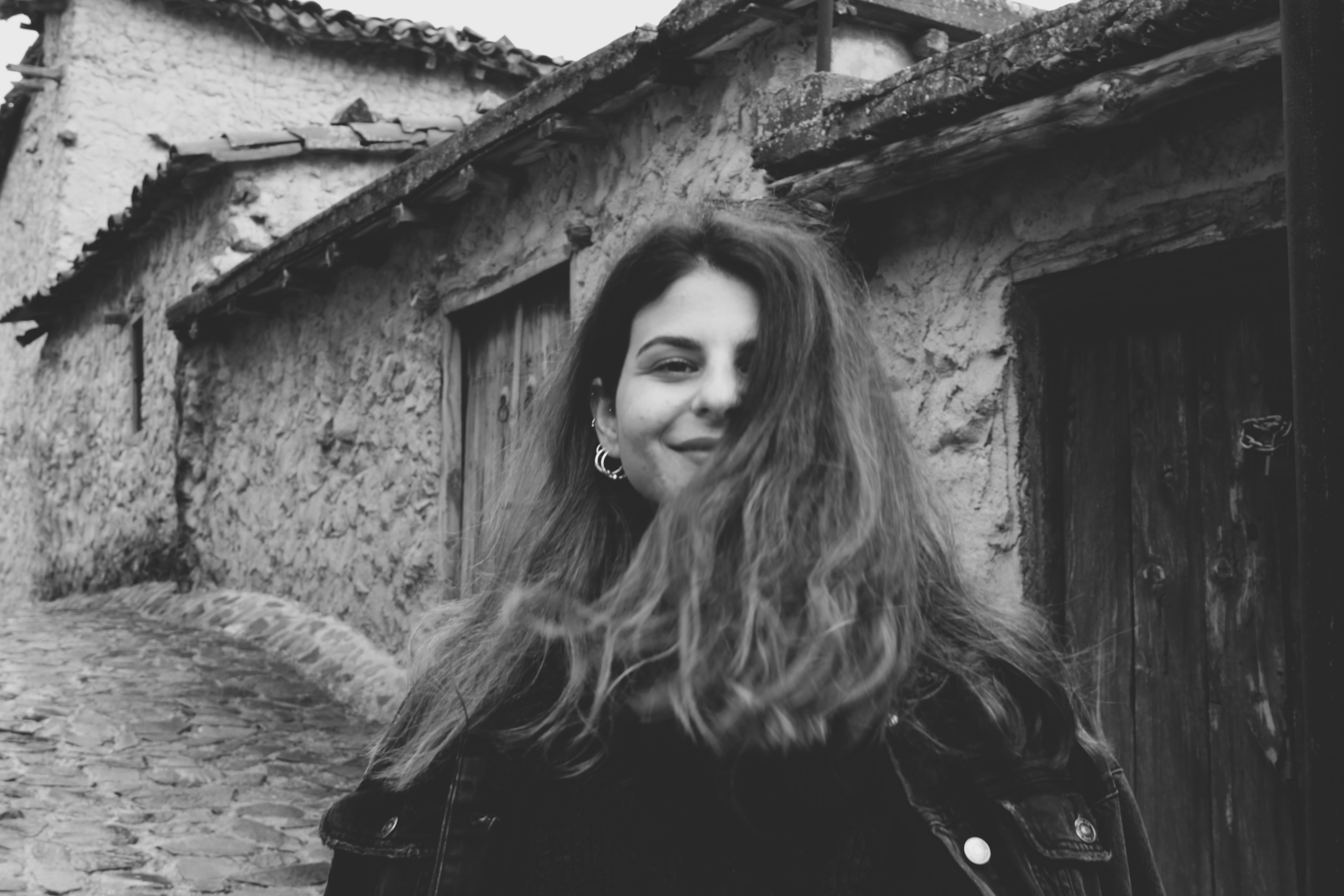
Grigoria
Thea
the creators.
Grigoria
Grigoria is a bioarchaeologist. She holds a BA n Archaeology from the University of Cyprus, a Master of Science in ‘Human Osteology and Funerary Archaeology’ from the University of Sheffield and a PhD in ‘Science and Technology in Archaeology and Cultural Heritage’ from the Cyprus Institute. Her doctoral research focused on health, living conditions and urbanism in Hellenistic and Roman Cyprus.
Her research interests focus on health, urbanism, sociocultural practices and differences, and living conditions in ancient Cyprus. She was a LAAMP Awardee Visiting Scientist (2017 and 2018) at the European Synchrotron Radiation Facility (ESRF) in France, trained on Synchrotron Radiation enabled bioarchaeology. She has also received Erasmus+ Grant traineeship at the School of Medicine – Department of Forensic Medicine and Toxicology, National and Kapodistrian University of Athens, trained in Forensic Anthropology. She had participated in several seminars, workshops and conferences and she is part of regional and international research archaeological and cultural projects. She has been collaborating with the Department of Antiquities of Cyprus over a decade in excavations and projects as well as with foreign Archaeological Missions in Cyprus.
Thea
Thea is a landscape archaeologist. She holds a BA in Archaeology from the University of Cyprus, a Master’s degree in ‘Rome and its Provinces’ from the University of Southampton, UK and a PhD in ‘Mediterranean Archaeology’ from the University of Cyprus. Her PhD thesis focused on Landscape Archaeology on the Mathiatis area in Nicosia district.
Her research interests focus on mining in ancient Cyprus and landscape archaeology. During her undergraduate studies, she completed a semester at the Universita degli Studi di Roma Tre, as an Erasmus Student. She also received an Erasmus+ Grant traineeship (2018) at the Laboratory of Geophysical-Satellite Remote Sensing and Archaeo-environment (FORTH) of the Institute of Mediterranean Studies (Rethymno, Crete). She has participated in several excavations around Cyprus and at the Bay of Kiladha (Argolis, Greece). Since 2017, she has been actively involved in a local initiative at the area of Mathiatis (Nicosia, Cyprus), aiming to protect South Mathiatis Mine-Strongylos, a Candidate UNESCO Monument. She has also been a member of the Association of Cypriot Archaeologists, and part of the Council for 2018-2021.
 cyprus archaeology gazette