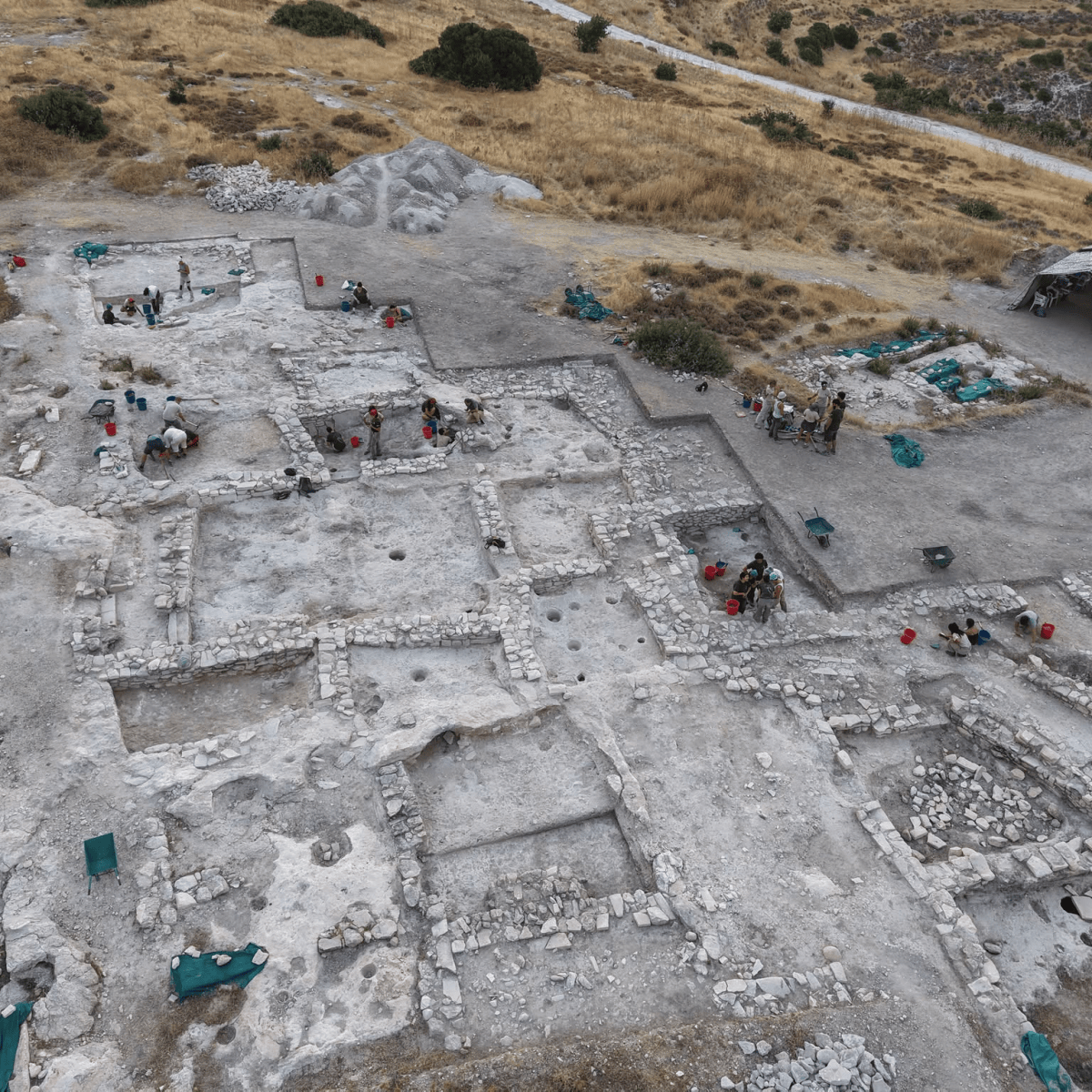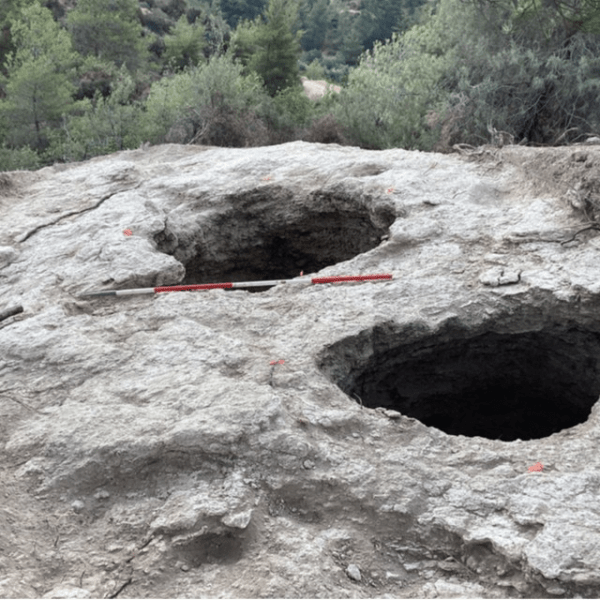
The Department of Antiquities of the Deputy Ministry of Culture has announced the successful completion of the 2025 field campaign of the Hala Sultan Tekke Hinterland Project, a multi‑year research initiative exploring the wider landscape surrounding the major Late Bronze Age urban centre of Hala Sultan Tekke in the Larnaka District. The latest campaign, conducted over three weeks in October–November 2025, marks a significant step forward in reconstructing the settlement organisation, industrial activity, and long‑term land use of the region.
Launched in 2021, the project is directed by Prof. Dr Ralf Vandam, Dr Jan Coenaerts, and Prof. Karin Nys of the Vrije Universiteit Brussel, working in collaboration with several international partners. Their aim is to move beyond the well‑known urban core of Hala Sultan Tekke and examine the broader hinterland that supported its economic and social networks. The 2025 season combined systematic archaeological surface survey, high‑resolution geophysical prospection and targeted landscape analysis. This integrated approach allows researchers to refine the chronological and settlement organization, land use and activity zones in the Larnaka area. Archaeological survey documented surface material across the Larnaka Salt Lake landscape and in the Pyrga region, improving the chronological and functional interpretation of known sites and identifying new areas for further investigation.
Survey Results: New Insights from Pyrga and the Salt Lake Basin
Field survey across the hinterland documented a wide range of surface materials, helping to clarify the distribution of activity zones from prehistory through late antiquity.
Copper Production in Pyrga
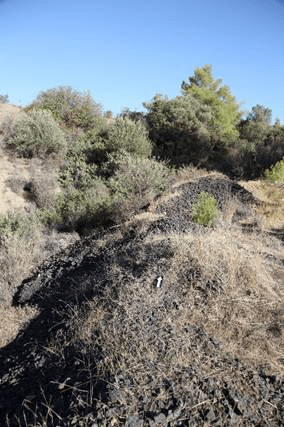
Previous work in Pyrga had already identified numerous copper‑slag heaps, pointing to metallurgical activity. The 2025 campaign strengthened this interpretation. Dense concentrations of Late Roman material were recorded at several locations around the copper slag heaps, suggesting a Late Roman production landscape.
The project continues to invest heavily in non‑invasive methods to map subsurface features. A a ground-penetrating radar survey conducted in 2024 in collaboration with The University of Cyprusunder the direction of Prof. A. Sarris.
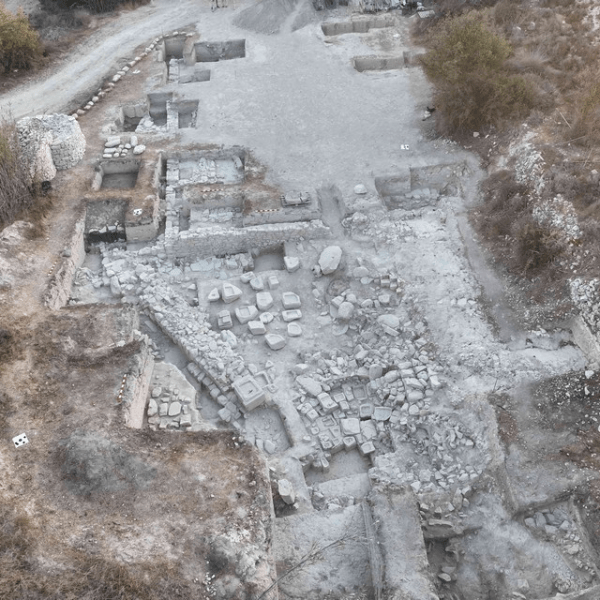
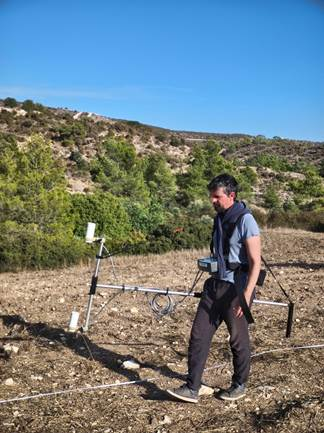
In 2025, Dr Igor Medarić (University of Ljubljana / University of Zurich) carried out a large‑scale magnetometric survey covering approximately 8,000 m².
High-resolution magnetometry revealed a complex pattern of subsurface anomalies, including linear features, clusters of strongly magnetised zones and spatially organised concentrations indicative of anthropogenic activity. Several anomalies are consistent with features potentially related to metallurgical installations, slag deposits and associated infrastructure, while others may reflect geological formations characteristic of the wider region.
Why the 2025 Campaign Matters
The new results contribute to a more nuanced picture of the economic landscape surrounding Hala Sultan Tekke, refining the spatial understanding of activity areas in the hinterland of the area and providing a strong foundation for future targeted excavation and interdisciplinary research. Cyprus Archaeology Gazette will continue to follow the project’s progress and report on new discoveries as they emerge.
Source and Photos: Department of Antiquities of Cyprus
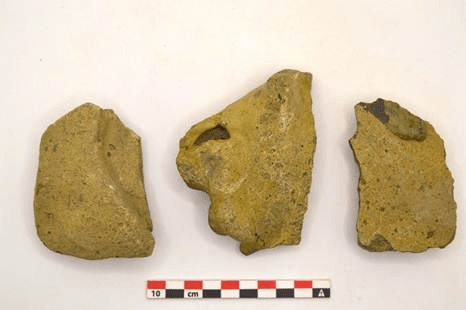
Fig. 1: Misfired ceramics were found on the surface in Pyrga, further supporting the idea of a Late Roman productive landscape.
Fig. 2: Several ancient metal slags heaps were identified in Pyrga.
Fig. 3: Pyrga. Vertical-gradient magnetometer survey with by Dr Igor Medarić (University of Ljubljana / University of Zurich).