A Window into Roman-Era Drinking Habits
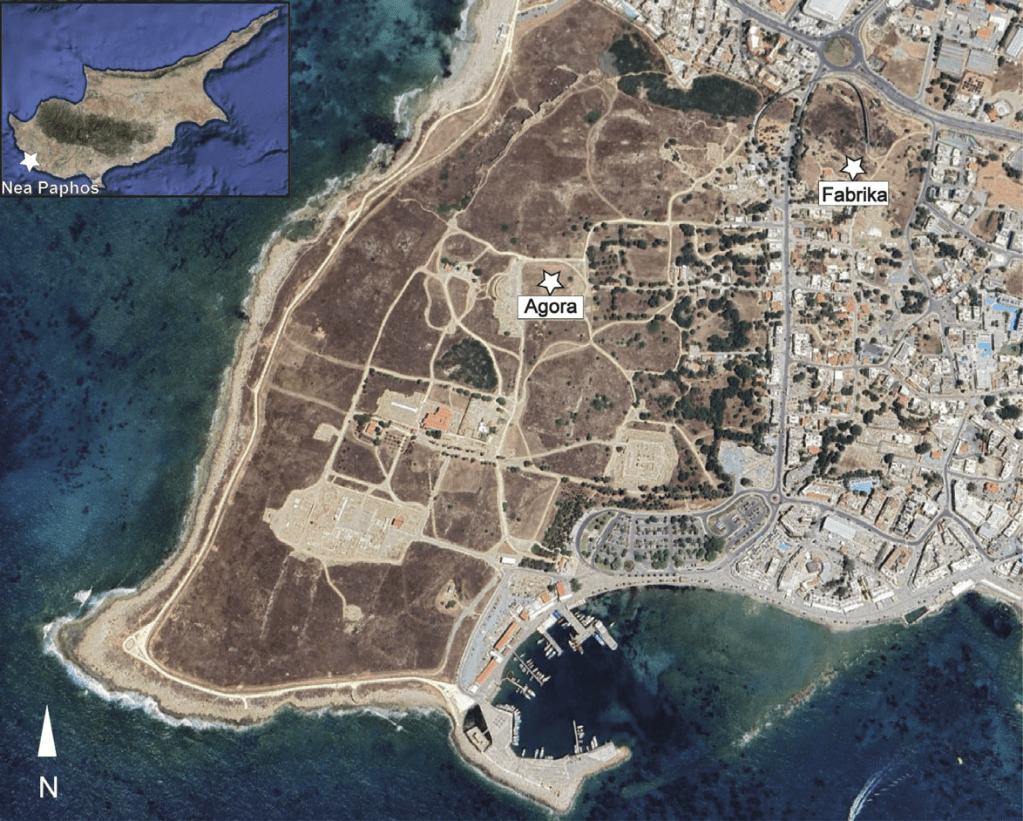
A new open-access study by Małgorzata Kajzer and Edyta Marzec (2026) sheds fresh light on how people in Early Roman Nea Paphos consumed—and produced—thin-walled pottery, a signature small-sized drinking tableware. The research focuses on finds from the city’s agora and Fabrika Hill, combining macroscopic study, elemental analysis (WD‑XRF), and thin-section petrography to trace where these vessels came from.
Local Production Existed—but Imports Dominated
The team identified both locally made and imported thin-walled vessels. A large waste deposit at Fabrika Hill, identified as production wasters, suggests that Nea Paphos had its own production during the first half of the 1st century CE. These local wares show mineralogical signatures matching the geology of western Cyprus. Yet despite this local industry, imports—especially from Asia Minor—were far more common.
Conservative Tastes in a Globalised World
One of the study’s most striking conclusions is that Paphian consumers remained conservative. Even though Roman drinking vessels circulated widely across the empire, the people of Nea Paphos did not adopt them in large quantities. Pottery from Asia Minor appears in the assemblage, showing that Nea Paphos was plugged into wider Mediterranean trade networks, yet local production and use is preferred.
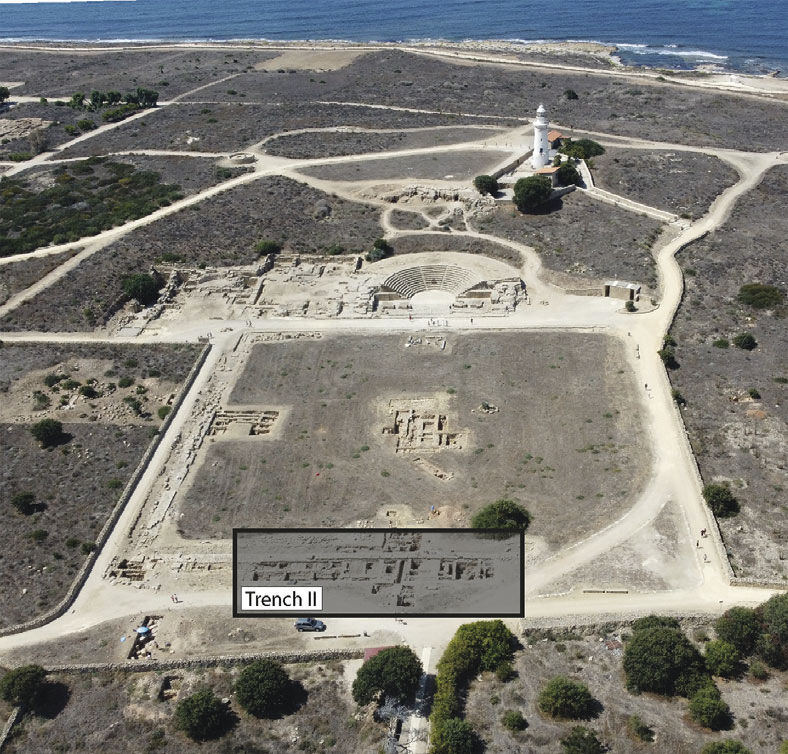
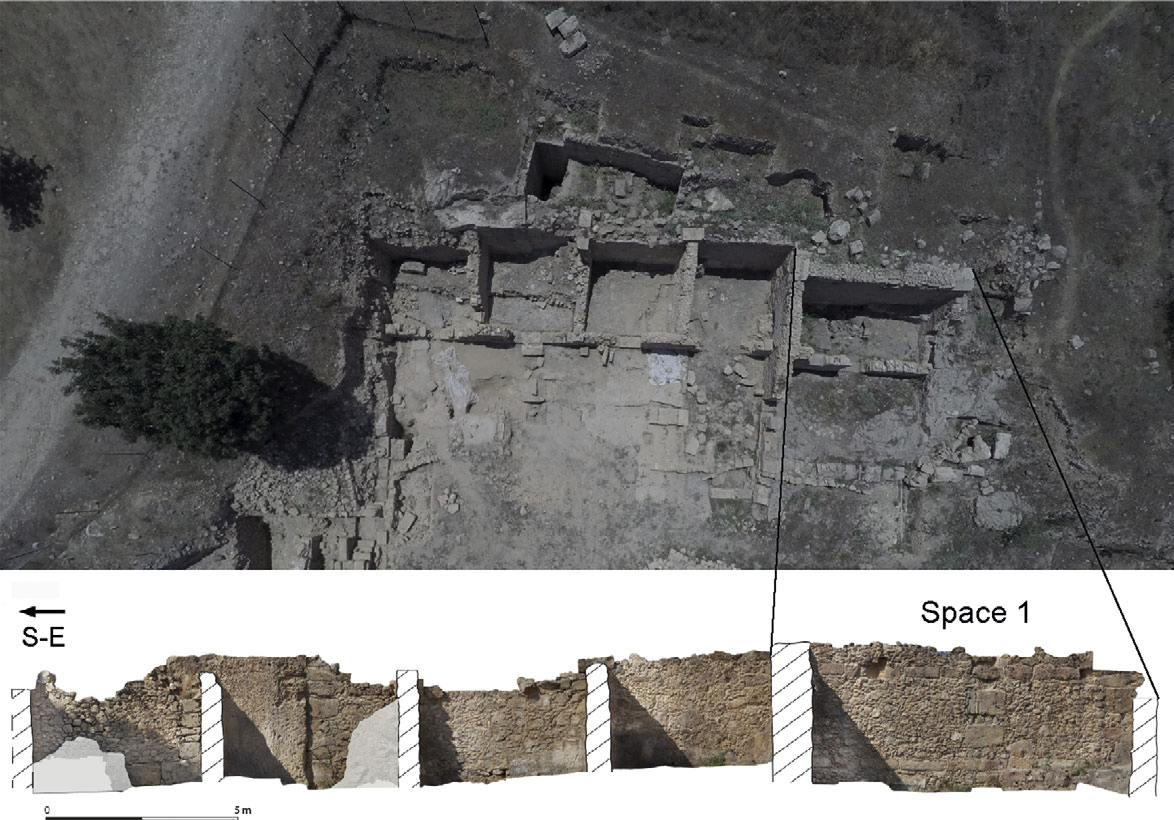
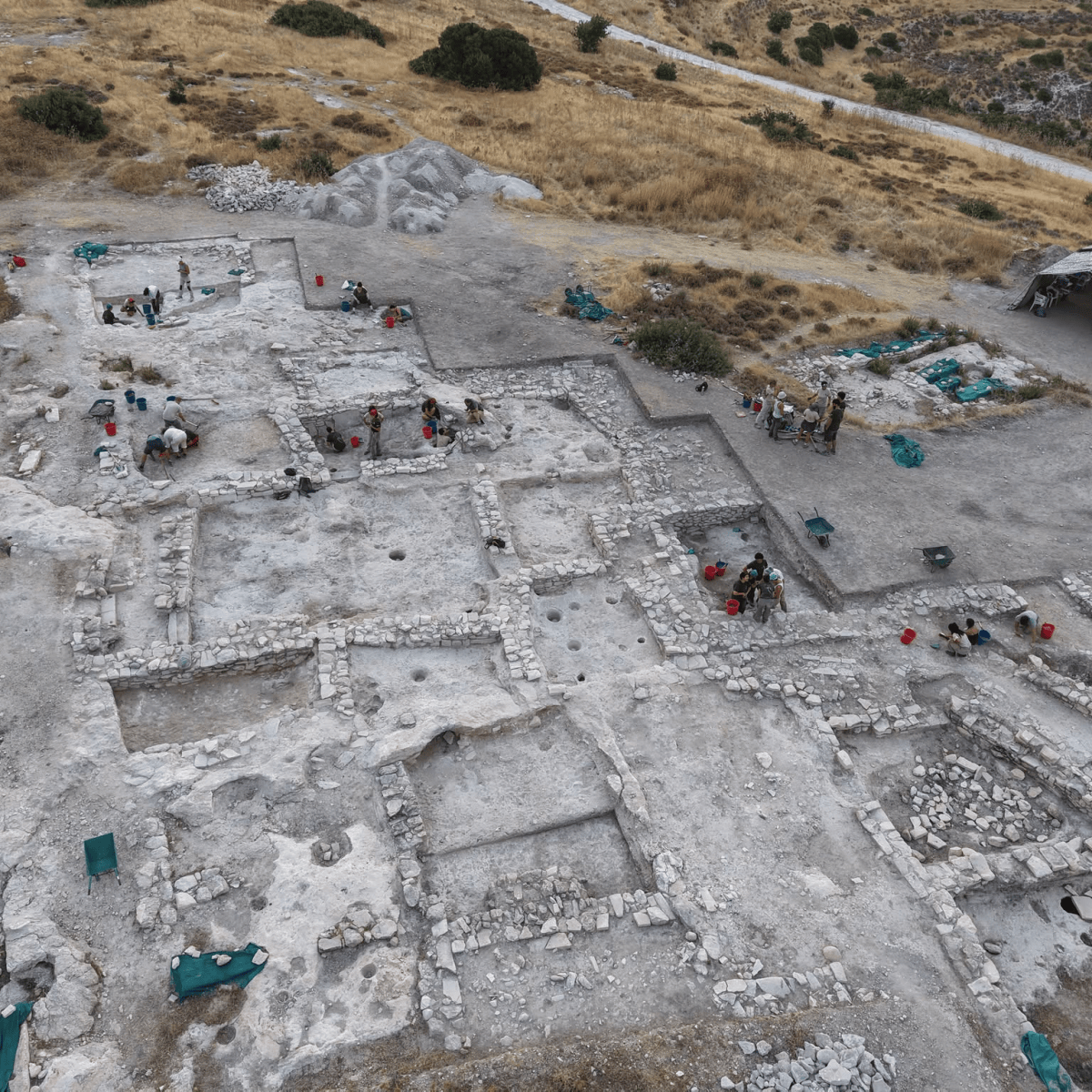
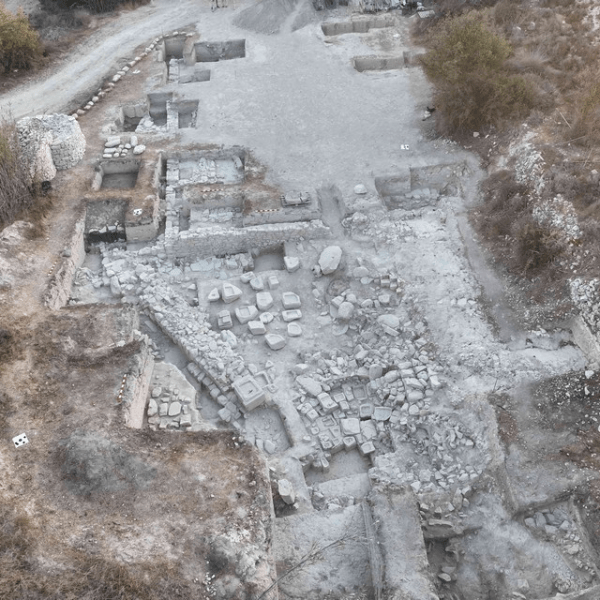
Figure 2. (left) Aerial photo showing the area of Trench II excavated by the Paphos Agora Project
(photo Ł. Bąk).
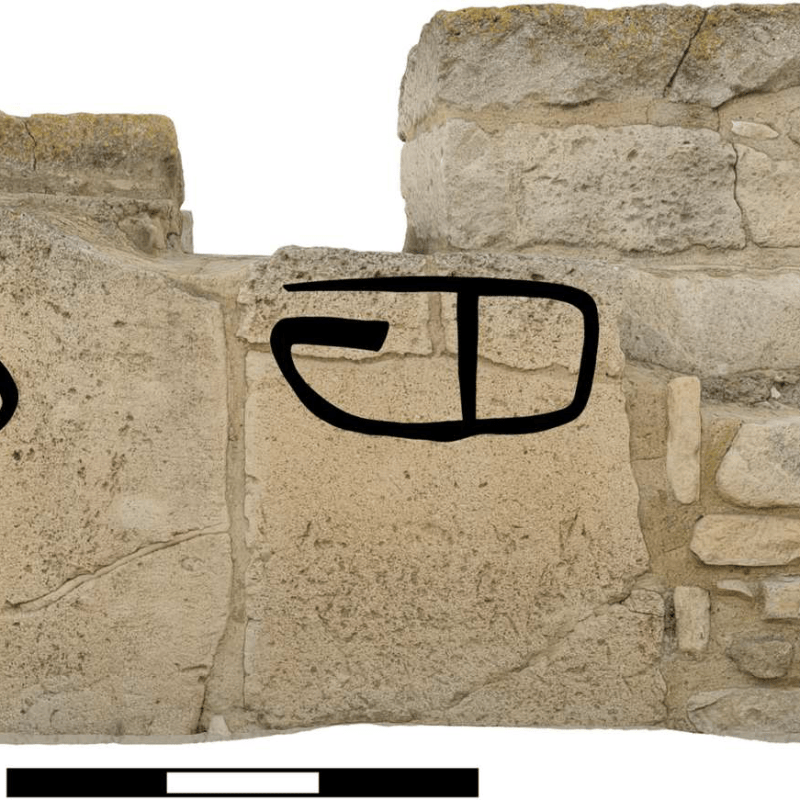
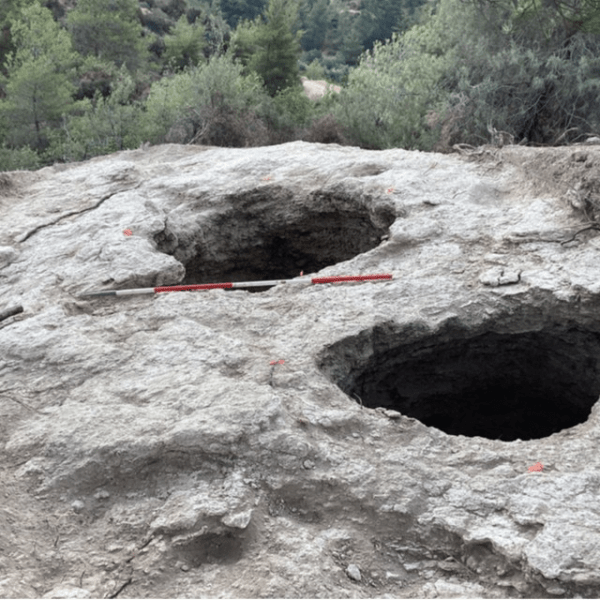
Figure 3. (right) Aerial view of the Early Roman building and the photogrammetry of the wall showing
the location of Space I (photo ©MafaP).
What’s the significance?
The findings contribute to broader debates about Romanisation, local identity, and ancient globalisation. Nea Paphos emerges as a city that participated in Mediterranean trade but maintained its own cultural rhythms—choosing selectively which Roman customs to adopt. As the authors argue “the results of the current study therefore provide further evidence for the limited impact of Roman influence on the island’s inhabitants, despite the significant role of Nea Paphos within Mediterranean exchange networks. This research contributes to the broader scholarly debate on the role of imperial traditions in local production within the framework of postcolonial theory, ancient globalisation, and identity”.
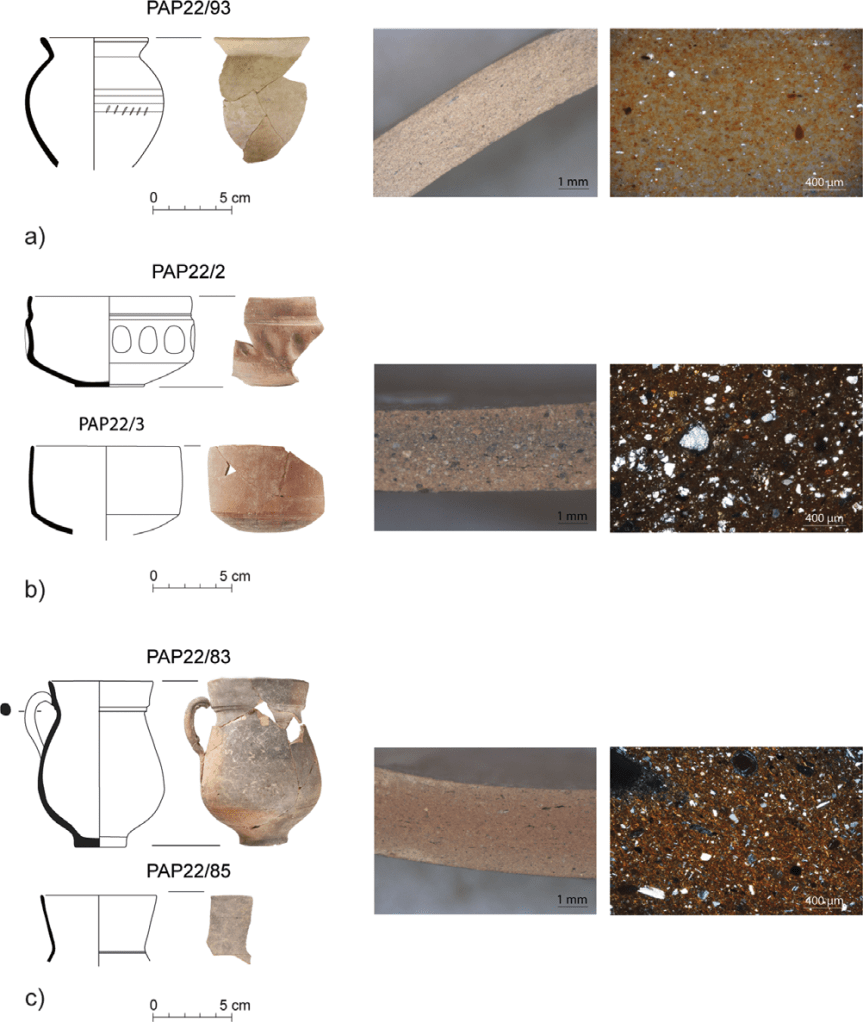
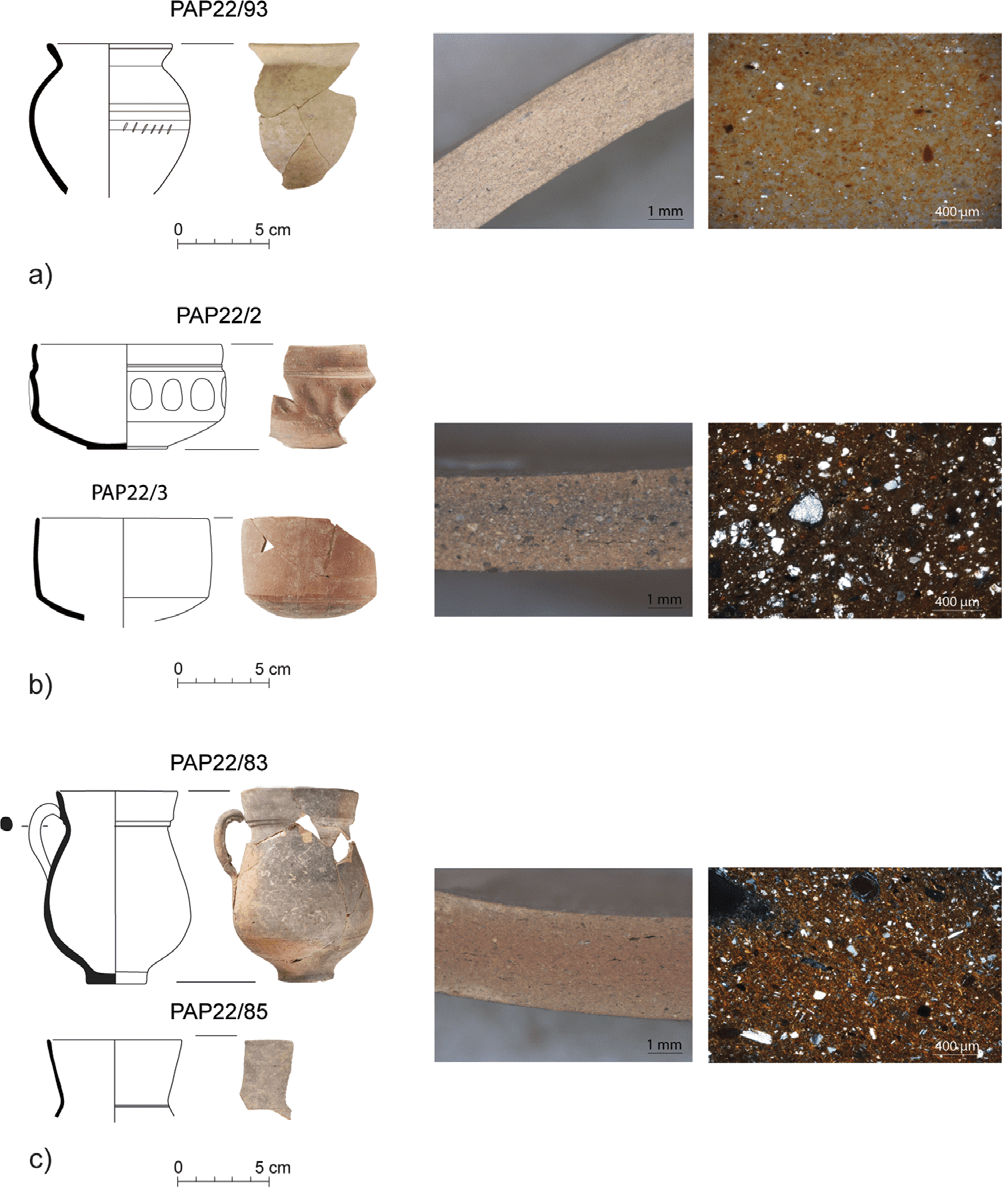
Photographs, drawings, fresh break and thin section photomicrographs (XPL) of a) Fabric 2 , b) Fabric 3 and c) Fabric 4, (Małgorzata Kajzer and Edyta Marzec 2026).
The study expands our understanding of thin‑walled (ThW) pottery in Nea Paphos, showing that alongside locally made vessels, the assemblage includes fabrics imported from outside Cyprus. Although the origins of some fabrics remain uncertain, their diversity highlights the complex production and trade networks of the Early Roman period. The findings also confirm that imports—especially from Asia Minor—far outnumbered local products. Overall, the evidence suggests that ThW pottery never gained real popularity on the island, unlike in the other eastern province, where major production centres flourished. This pattern supports the view that external cultural influences had only limited impact on Cypriot consumers, who appear to have maintained conservative preferences in their choice of pottery and practices.
The paper is available here.
References:
Kajzer M, Marzec E. DRINK LIKE THE ROMANS: PRODUCTION AND CONSUMPTION OF THIN-WALLED WARE POTTERY IN NEA PAPHOS DURING THE EARLY ROMAN PERIOD. The Annual of the British School at Athens. Published online 2026:1-33. doi:10.1017/S0068245426100379