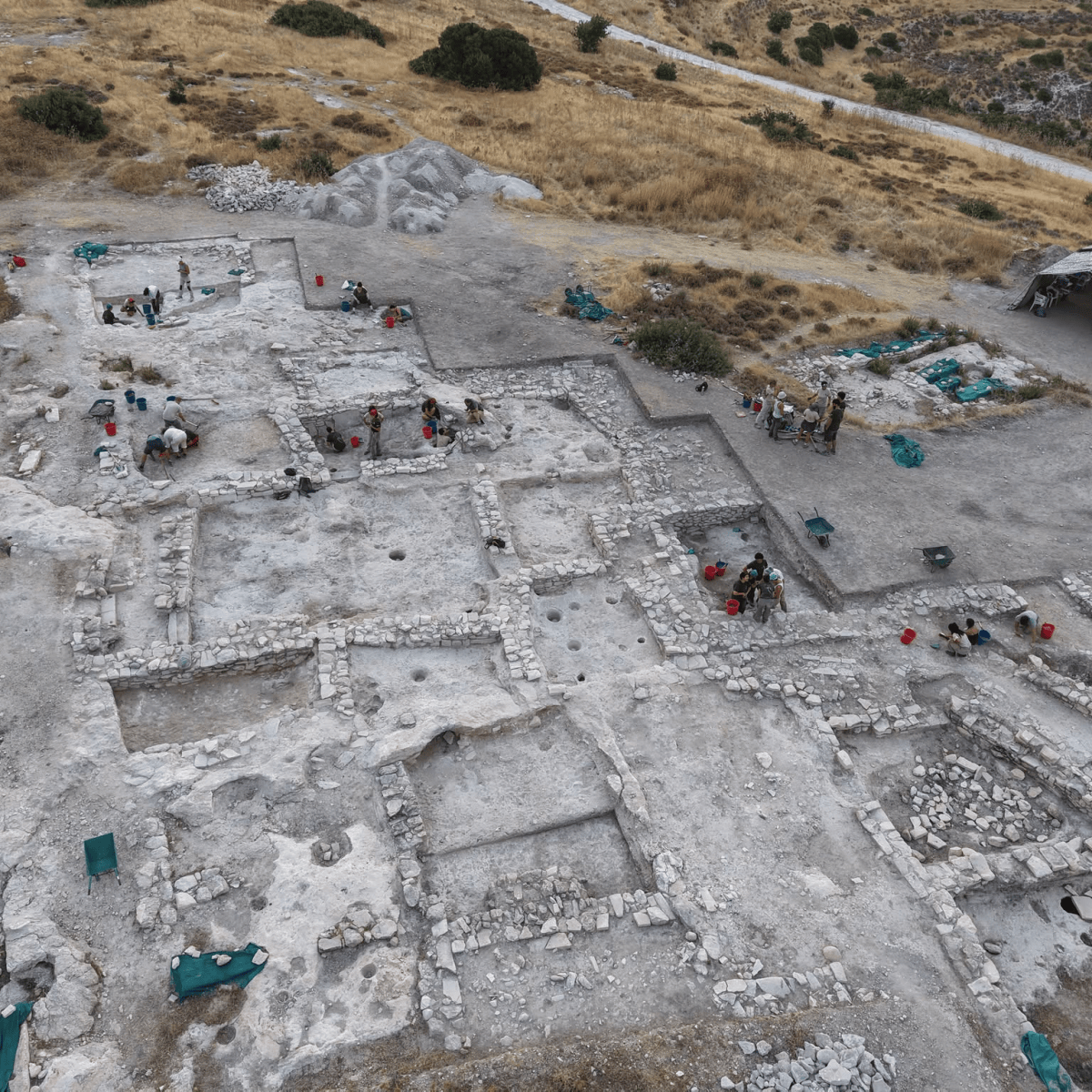
A major archaeological discovery has come to light in Larnaka (ancient Kition), where researchers have identified 23 previously unknown ships dating back more than 3,000 years, to the period traditionally associated with Homeric Cyprus. The find, announced by the Department of Antiquities, significantly enriches our understanding of the island’s maritime activity during the Late Bronze Age and Early Iron Age.
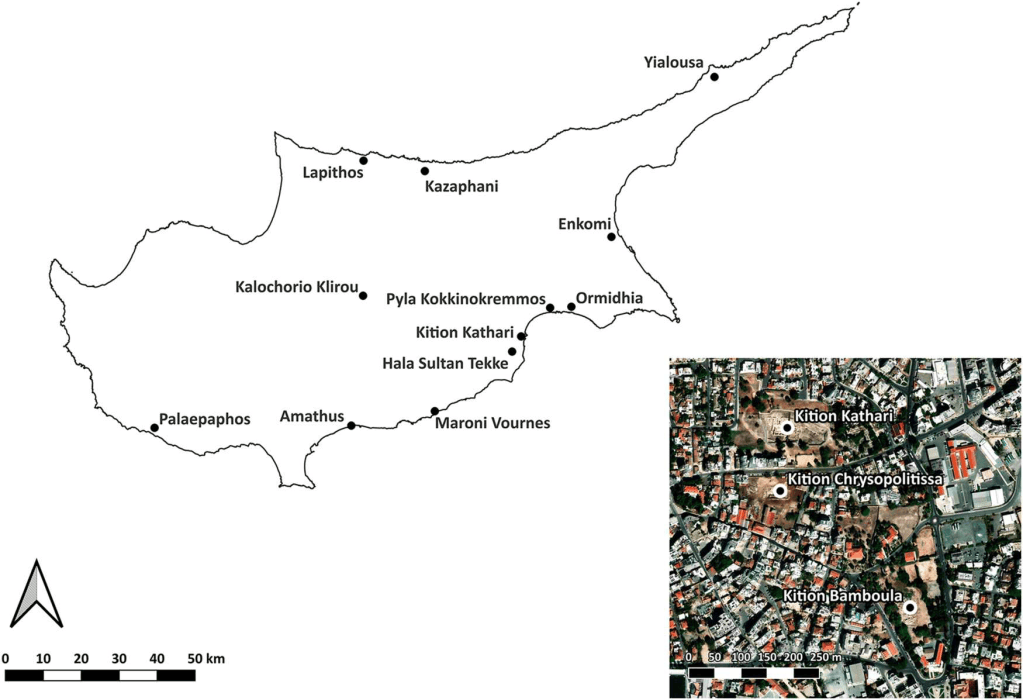
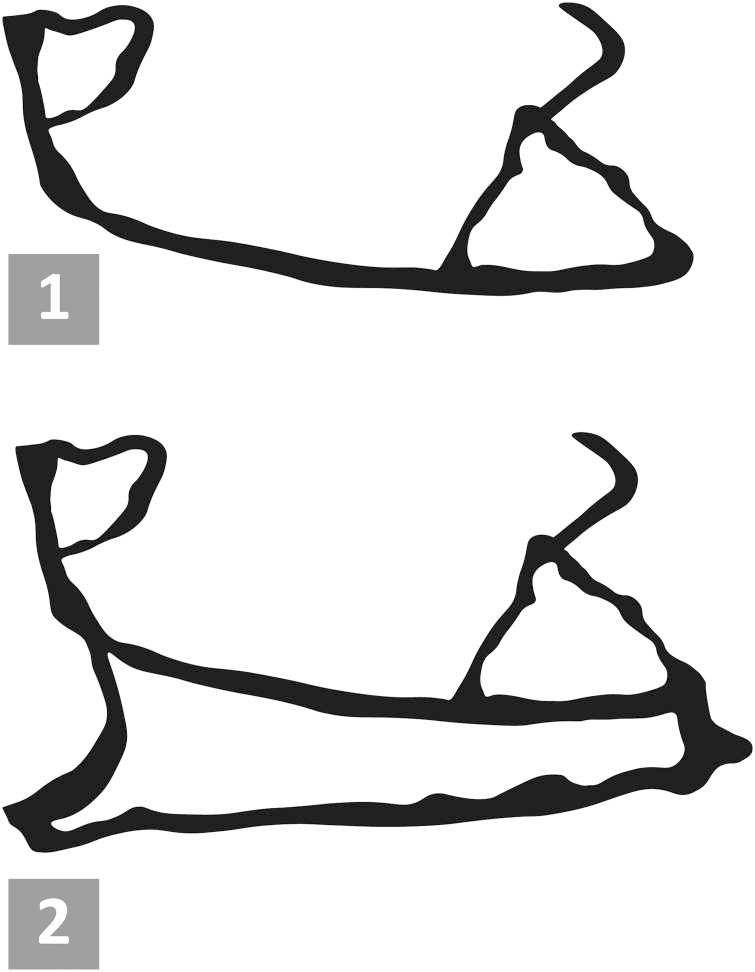
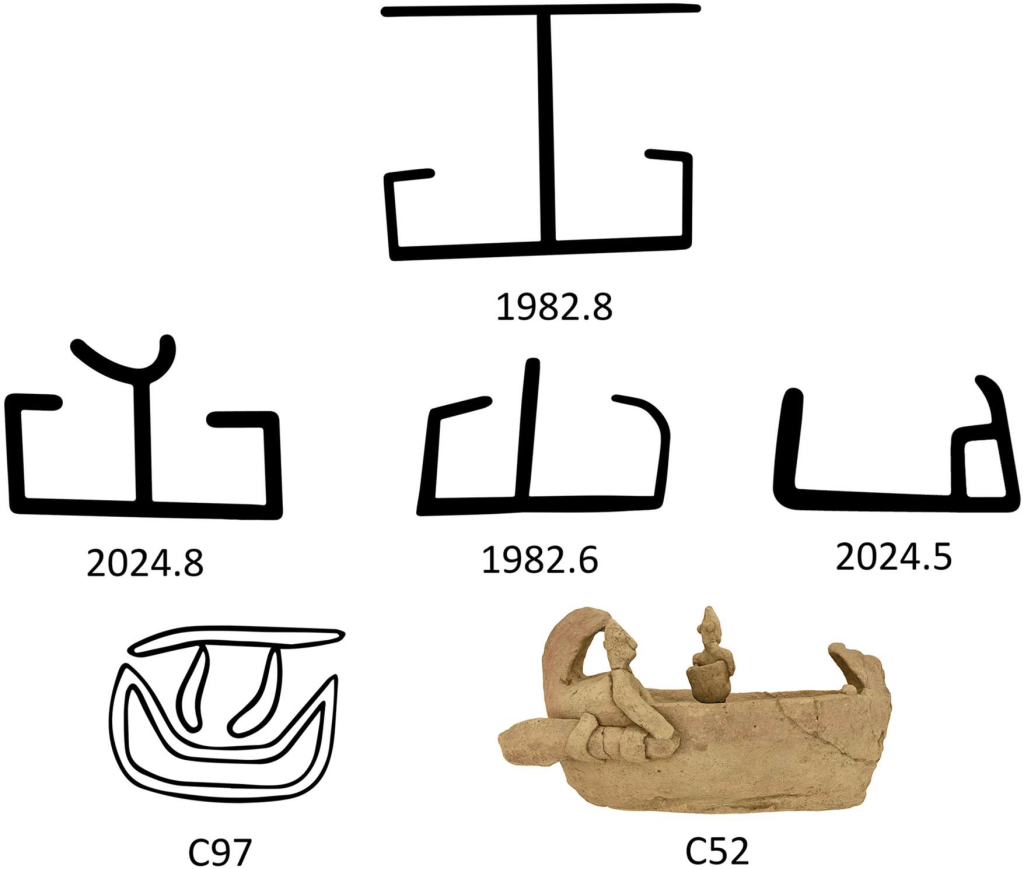
The new open‑access study published in the International Journal of Nautical Archaeology presents the most comprehensive reassessment to date of the ship graffiti carved on the monumental ashlar architecture of Kition Kathari, Larnaka. The article, “The Ship Graffiti from Late Bronze Age–Early Iron Age Kition, Cyprus: NewAdditions and Reconsiderations 40 Years Later” by Graham C. Braun, Caroline Barnes, and Tzveta V. Manolova, offers major updates to a corpus first published four decades ago. According to the authors, high‑resolution laser scanning conducted in 2024 has revealed significantly more incised ship images than previously recognised. As the article states, “High‑resolution laser scanning undertaken in 2024 revealed more incised images than had previously been recognised, especially on the southern façade of the monumental Temple 1.” These new recordings show that the graffiti are far more numerous, detailed, and varied than the 19 examples originally documented in 1985.
A Diachronic Tradition of Carving Ships
The study challenges long‑standing assumptions about the dating of the graffiti. While earlier scholarship attributed all carvings to the Late Bronze Age, the new analysis—combining stratigraphic evidence with iconographic comparanda—demonstrates that the images were created continuously from the Late Bronze Age into the Early Iron Age. The authors note that “the graffiti were carved continuously from the Late Bronze Age into the Early Iron Age,” revealing a long-lived practice of marking ships on temple architecture. This diachronic perspective reshapes our understanding of Kition’s maritime identity during a period of major regional change, including the collapse of Late Bronze Age networks and the emergence of new Iron Age communities.
Newly Identified Ships and Diverse Maritime Traditions
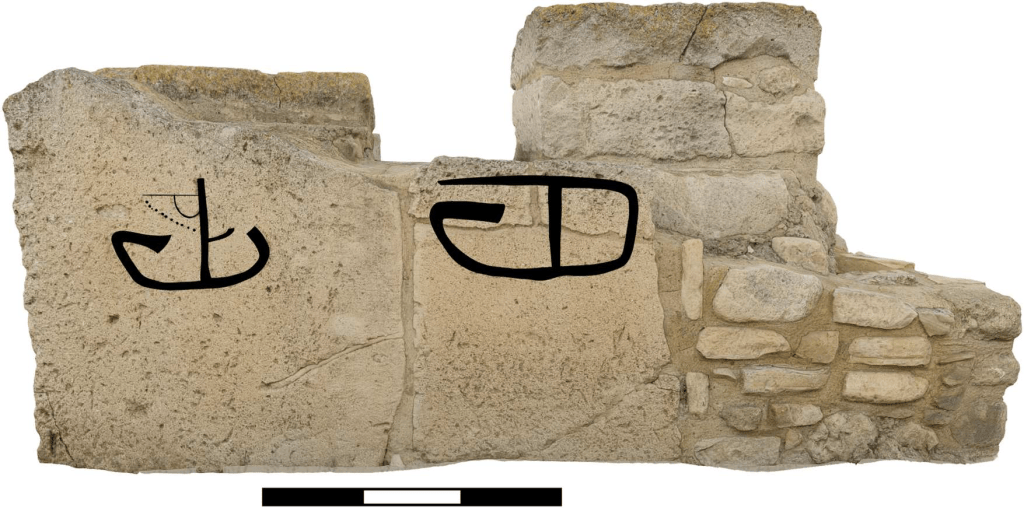
The expanded corpus shows a striking diversity of ship types. The authors identify associations with Levantine and Aegean shipbuilding traditions, alongside distinctive Cypriot features. This variety suggests that Kition’s inhabitants were familiar with multiple maritime technologies and that the city remained deeply connected to wider Mediterranean seafaring networks. The study also identifies previously unnoticed graffiti, including examples carved on a repair block near the southeast entrance of Temple 1—evidence that ship imagery continued to be added as the building was modified over time.
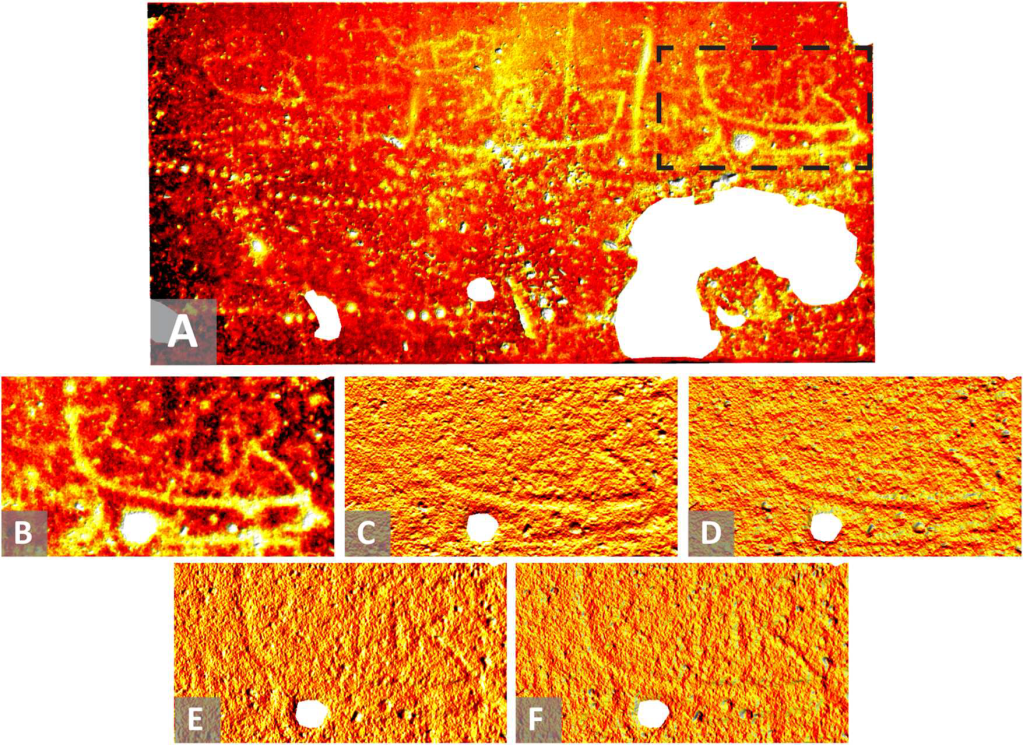
Figure 3. Examples of Terrestrial Laser Scanning analyses: A) DtP of Block T1.5; Focused analysis of 1982.13: B) DtP; C) AtP (X-axis, hot); D) AtP (X-axis, hot inverted); E) AtP (Y-axis, hot); F) AtP (Y-axis, hot inverted). Scan by G.C. Braun. (Braun et al. 2026).
Digital Recording and Preservation
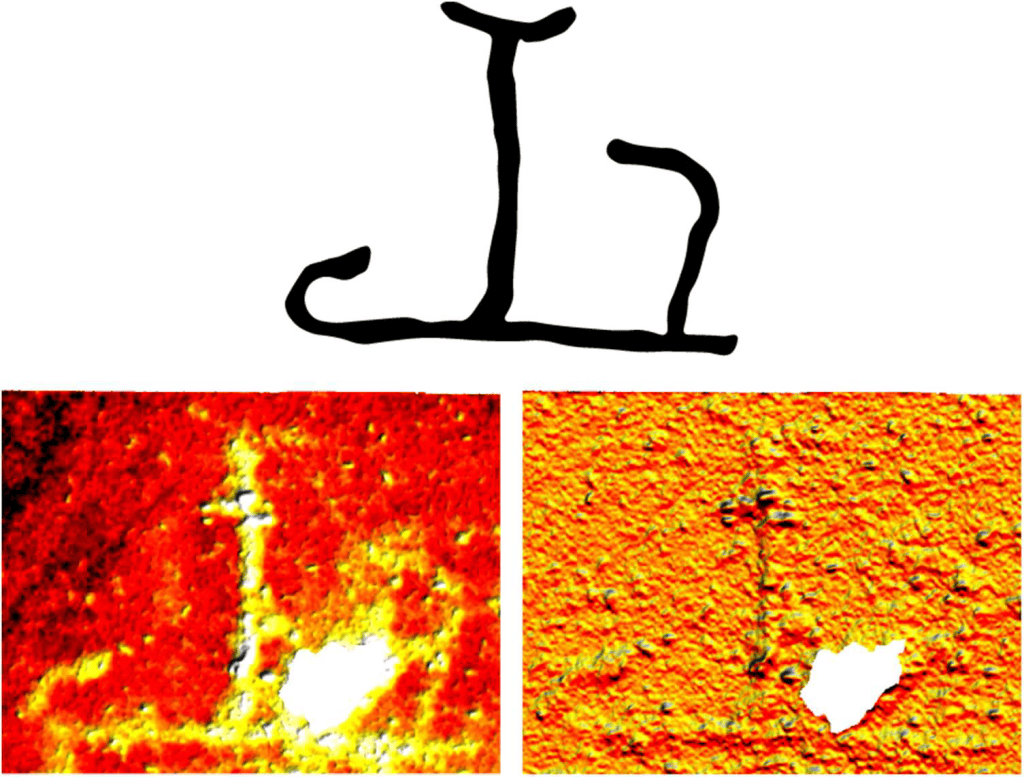
The research highlights the importance of digital heritage methods for documenting fragile archaeological material. Many of the graffiti have suffered erosion since their excavation, making them difficult to see with the naked eye. Through laser scanning, photogrammetry, and 3D modelling, the team produced detailed visualisations that reveal incision depth, angle, and morphology with unprecedented clarity. These digital models not only enable more accurate interpretation but also serve as a long-term preservation record for future research.
A New Foundation for Cypriot Maritime Archaeology
This updated corpus provides a crucial resource for understanding maritime symbolism, cultic practice, and seafaring identity at Kition. The ship graffiti—carved on monumental temple façades and altars—reflect the community’s close relationship with the sea, its harbour, and its role within Late Bronze and Early Iron Age trade networks. The study marks a significant milestone in Cypriot nautical archaeology, offering new data, revised chronologies, and a richer appreciation of Kition’s maritime past.
Sources:
– Graham C. Braun, Caroline Barnes & Tzveta V. Manolova (18 Aug 2026): The Ship Graffiti from Late Bronze Age–Early Iron Age Kition, Cyprus: New Additions and Reconsiderations 40 Years Later, International Journal of Nautical Archaeology, DOI: 10.1080/10572414.2026.2702905

 cyprus archaeology gazette