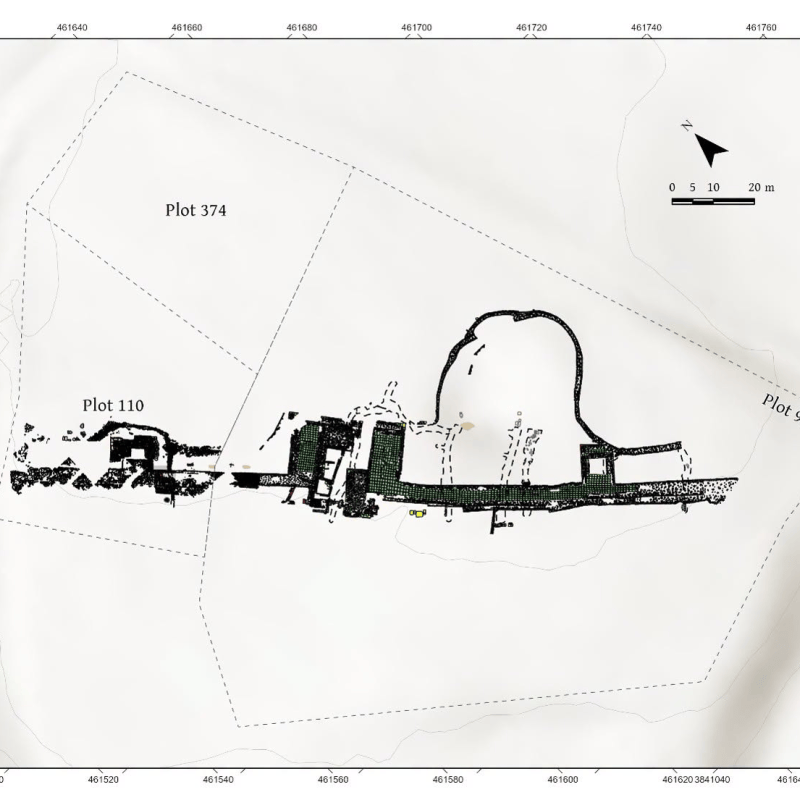
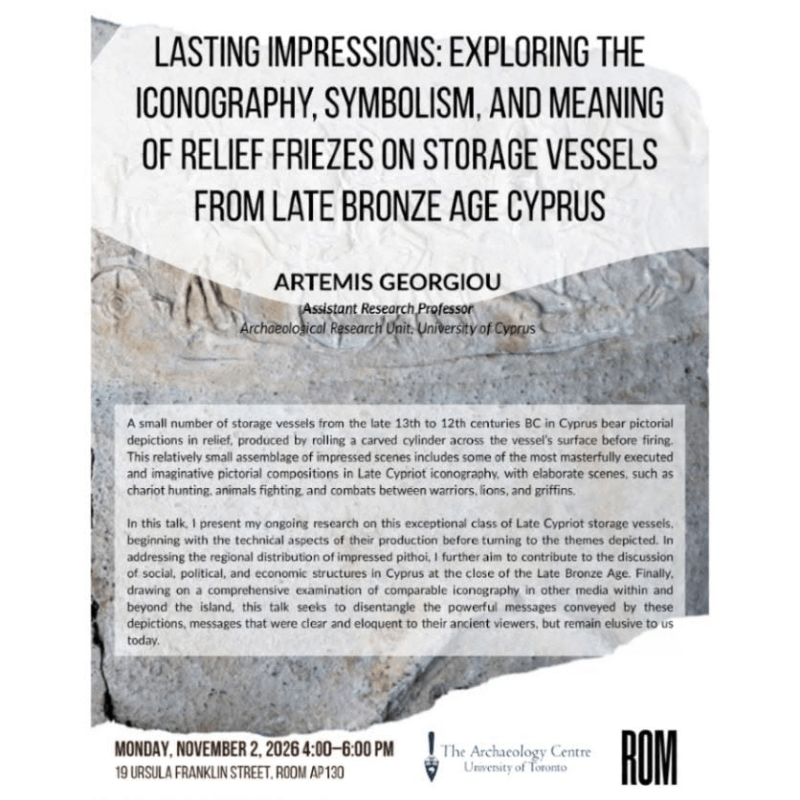
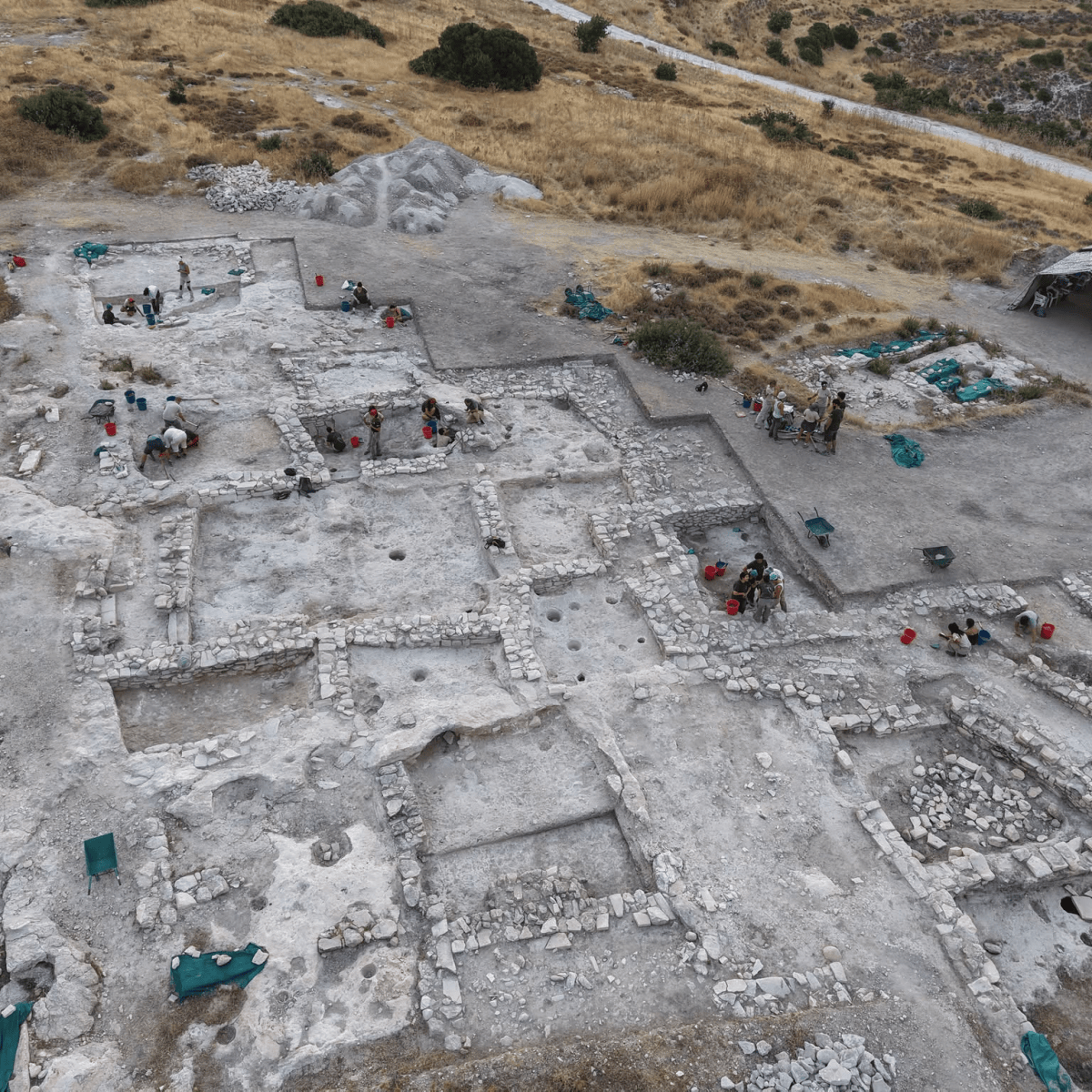
New discoveries at Dromolaxia-Vyzakia/Hala Sultan Tekke provide important evidence for the origins of one of Bronze Age Cyprus’s largest and most internationally connected urban centres. Archaeologists working at Dromolaxia-Vyzakia/Hala Sultan Tekke have uncovered, for the first time, stratified architectural remains and diagnostic pottery dating to the 15th–17th centuries BC, providing new evidence for the earliest occupation of the site.
The discoveries were made during the 2026 field season conducted by an international archaeological mission led by Professor Peter M. Fischer of the University of Gothenburg and Professor Teresa Bürge of the Universities of Gothenburg and Bern. According to the Department of Antiquities, Deputy Ministry of Culture, archaeological investigations took place during February, May and June 2026.
A Major Bronze Age City on Cyprus
Hala Sultan Tekke developed into a thriving urban centre covering as much as 50 hectares, making it the largest known Bronze Age site on Cyprus. The settlement was founded no later than the 17th century BC, during the transition from the Middle to the Late Bronze Age, and prospered for approximately five centuries before its destruction and abandonment around 1150 BC. Copper played a fundamental role in the city’s economy. Archaeological excavations have brought to light evidence of extensive metallurgical activity, including slag heaps, copper ore, furnaces and crucibles. Raw materials originating in the Troodos Mountains were processed at the settlement and exported through its protected harbour. During the 14th and 13th centuries BC in particular, Hala Sultan Tekke developed into an important centre for Mediterranean commerce.
Trade Connections Stretching Thousands of Kilometres
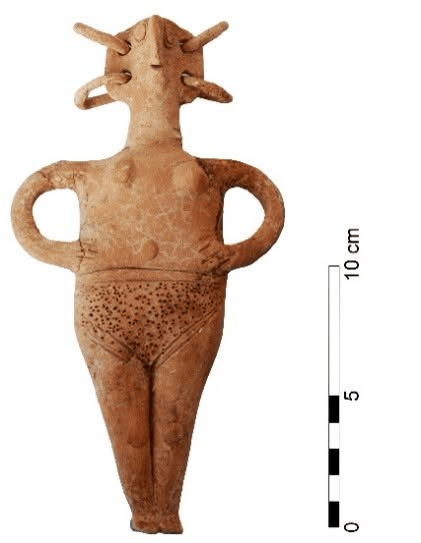
One of the most remarkable characteristics of Hala Sultan Tekke is the geographical range of its imported objects. Goods discovered at the site point to connections extending from Sardinia in the west to Afghanistan and India in the east, and from the Baltic region in the north to Nubia in the south. The finds demonstrate the extraordinary reach of the commercial networks in which the Cypriot city participated and highlight its position as a meeting point between different cultures and economies of the ancient world.
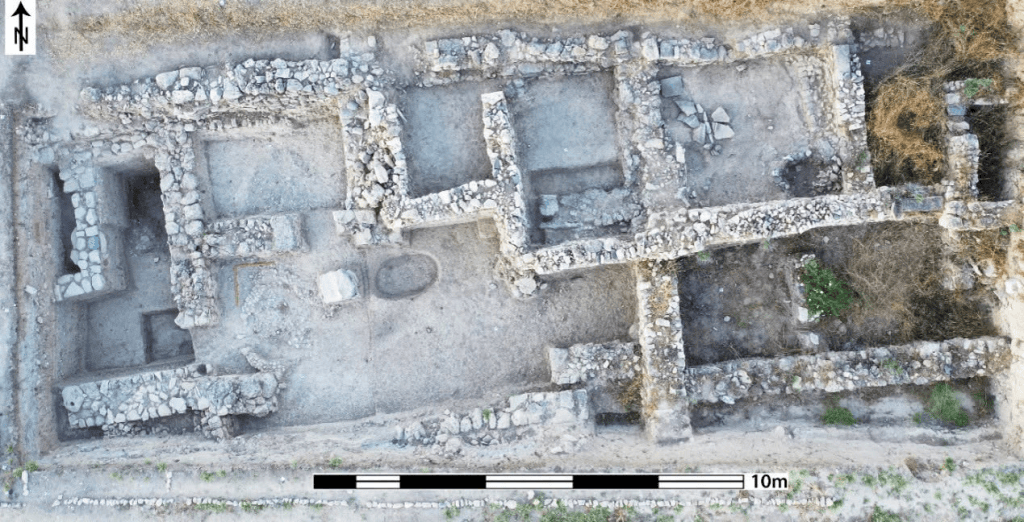
While complementary investigations were also undertaken in the cemetery, the principal focus of the 2026 season was City Quarter 1 within the settlement. Fischer and Bürge directed the excavation and post-excavation research with the assistance of Dr Rainer Feldbacher and an international team of specialists and students. Researchers from the Cyprus Institute also contributed to the project. Professor Kirsi Lorentz and Dr Yuko Miyauchi carried out bioarchaeological research, while Professor Sorin Hermon contributed advanced two- and three-dimensional documentation and non-destructive analyses of archaeological material.
Evidence Pushes the Settlement’s History Further Back
Previous excavations had revealed the site’s oldest urban remains dating to the 14th century BC. Although earlier seasons recovered isolated pottery sherds belonging to the late Middle Bronze Age and early Late Bronze Age, these finds had not been associated with occupation layers from the same periods. The 2026 excavations have changed that picture. For the first time, the Swedish mission uncovered stratified architecture together with diagnostic pottery dating to the 15th–17th centuries BC. The remains belong to Strata 4, 5 and 6 of the site’s archaeological sequence. This is particularly important because the finds provide archaeological contexts through which researchers can investigate the early development of the settlement rather than relying solely on isolated earlier artefacts.
White Slip, Base-ring and Red Lustrous Pottery
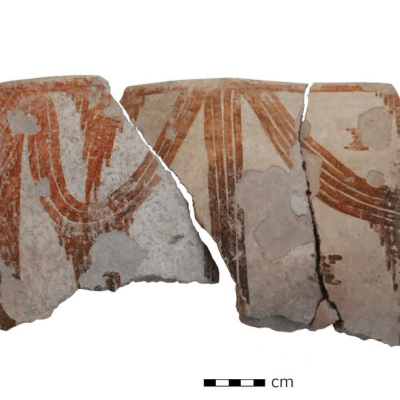
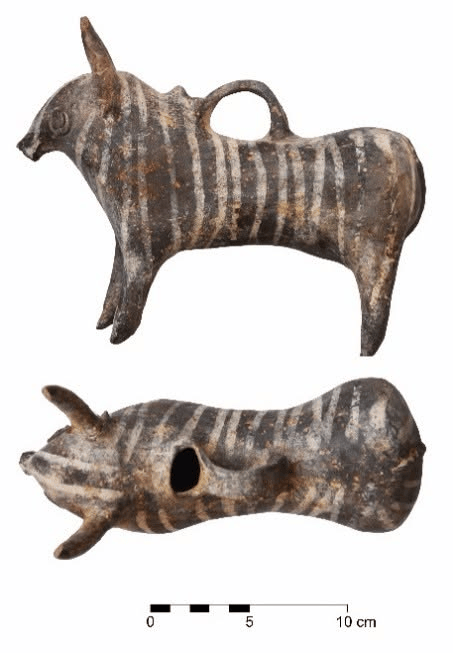
Stratum 4 produced a characteristic group of Cypriot ceramics, including monochrome and bichrome-decorated White Slip I ware, Base-ring I ware, Bichrome Wheel-made ware, and Black and Red Slip wares. Imports from this phase are currently represented by Anatolian Red Lustrous Wheel-made spindle bottles. Significantly, Aegean pottery is absent from these levels. According to the excavation results, this supports previous observations that imports associated with the Mycenaean cultural sphere reached their peak later, during the 14th and early 13th centuries BC.
Tracing Hala Sultan Tekke Back to the Middle Bronze Age
Even earlier evidence emerged from Strata 5 and 6. White Slip I and Base-ring I pottery is virtually absent from these levels, with the exception of a small number of possible Proto White Slip and Proto Base-ring examples. Instead, archaeologists encountered increasing quantities of pottery associated with the transition between the Middle and Late Bronze Ages and, in part, the Middle Cypriot III period. These ceramic traditions include Red-on-Red, Red-on-Black and White Painted IV–VI wares. The assemblages are helping archaeologists establish the chronological and cultural setting of the earliest occupation so far documented at Hala Sultan Tekke.
New Evidence for the Origins of a Mediterranean Trading Centre
The significance of the 2026 discoveries extends beyond establishing an earlier date for occupation. Hala Sultan Tekke would eventually become one of the major urban and commercial centres of Bronze Age Cyprus, supported by copper production, maritime trade and connections extending across the Mediterranean and considerably beyond it. By uncovering settlement remains from the centuries preceding the city’s best-known period of prosperity, archaeologists now have an opportunity to investigate how that transformation began. The results of the 2026 season therefore provide an important new chapter in the archaeology of Hala Sultan Tekke and in the broader study of urbanisation, trade and cultural interaction in Bronze Age Cyprus.
Source:
– Department of Antiquities, Deputy Ministry of Culture, Republic of Cyprus. Press release on the 2026 field season at Dromolaxia-Vyzakia/Hala Sultan Tekke.