On the north-western coast of Cyprus, near the modern village of Yialia and not far from Polis Chrysochous, archaeologists uncovered an object that offers a remarkable glimpse into the religious and artistic world of ancient Cyprus: the terracotta head of a richly adorned female figure. Although only part of the original statue survives, the head is much more than an isolated work of ancient craftsmanship. Its distinctive face, elaborate hairstyle and traces of jewellery connect it with the religious traditions of western Cyprus and raise fascinating questions about local workshops, regional artistic styles and the worship of female divinities during the Cypro-Archaic period.
a Sanctuary near Ancient Marion
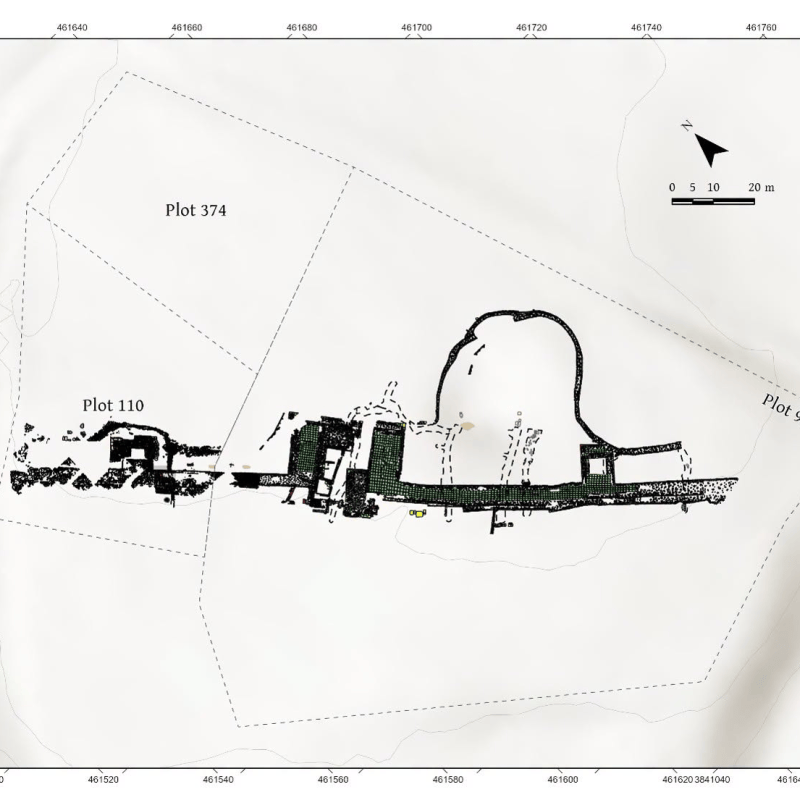
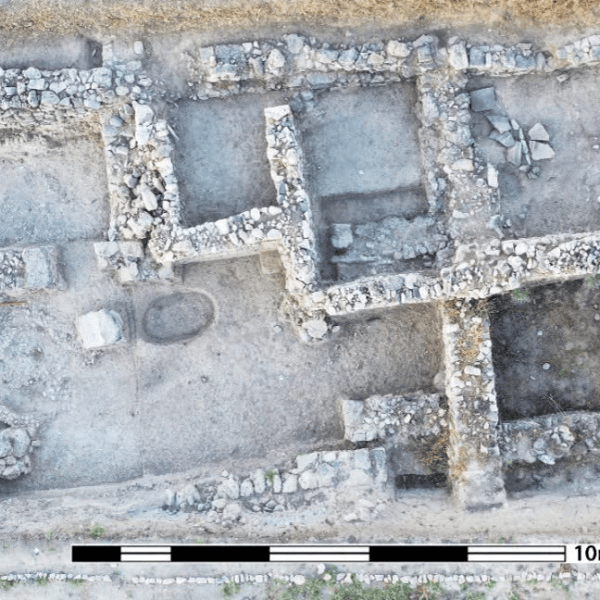
The terracotta head was discovered at Photies, a site in the area of Yialia in north-western Cyprus. The site lies less than 15 kilometres from ancient Marion and was excavated by Dr Eustathios Raptou, Department of Antiquities of Cyprus. The excavations at the site brought to light the remains of an ancient sanctuary.
The sanctuary had suffered damage from illicit digging and intensive agriculture before a rescue excavation was undertaken in 2007. Archaeological discoveries, including numerous terracottas, indicate that the sanctuary was already in use around the beginning of late 7th/ early 6th century BC, possibly earlier, and continued to be used into the Hellenistic period. The precise identity of the divinity worshipped there cannot yet be established with certainty. Nevertheless, the iconography of the figures and their associated symbols led the excavator to suggest a fertility cult, probably associated with the Great Goddess of Cyprus.
a Female Face from Around 600 BC
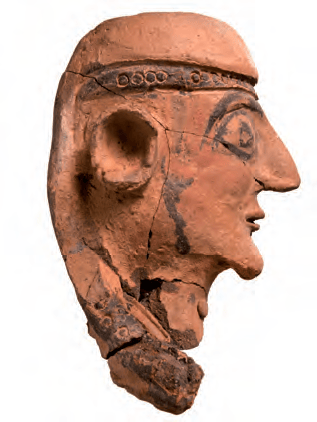
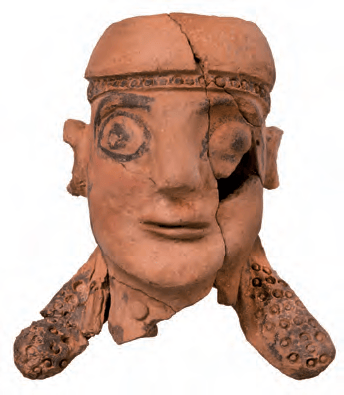
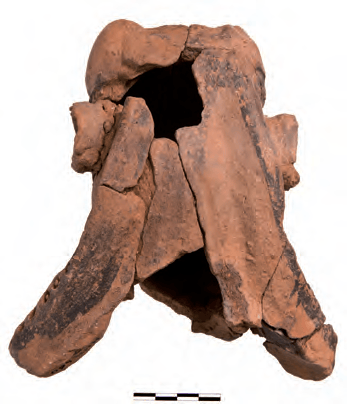
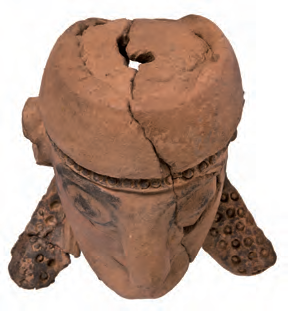
The surviving terracotta head measures approximately 15 centimetres high and 10 centimetres wide, placing the original work among medium-sized terracotta sculptures rather than small figurines. Its appearance is immediately distinctive. The face is oval, with large eyes positioned high on the face, a prominent nose, thin projecting lips and a broad, rounded chin. Black pigment was used to emphasise the eyes, eyebrows and hair, while traces of red colour survive on parts of the face.
Above the forehead is a high diadem. The hair descends behind the head and forms locks falling towards the shoulders, while smaller hook-shaped curls appear around the temples. The hair was further ornamented with a repeated pattern of impressed circles. The figure was also richly adorned with jewellery. Although much has disappeared, traces indicate necklaces and ear ornaments. Such decoration forms an important part of the iconography of Cypriot female figures during the Archaic period. Stylistic comparison places the head around 600 BC or the beginning of the 6th century BC. It consequently belongs to the earliest phase identified at the sanctuary.
How Was the Yialia Head Made?
One of the most intriguing aspects of the sculpture is the way it was manufactured. Rather than being produced by a single process, the head combines several techniques. Evidence inside it indicates that the craftsman began with a hollow cylindrical form created on a potter’s wheel. The upper part was subsequently constructed with coils of clay and closed at the top with a small clay plate, leaving an opening that was probably an air vent. The exterior was then worked by hand to create the human face. Individual features such as the nose, lips, chin and ears were probably made separately and attached. Additional pieces of clay were used for details of the hairstyle and ornaments. The sculpture therefore preserves evidence not only of ancient religious imagery but also of the technical knowledge of Cypriot terracotta craftsmen. The flexibility of clay allowed the artist to combine wheel-working, hand modelling and separately applied details within a single figure.
a Distinctive Art of Western Cyprus
The Yialia head is particularly important because of its connections with terracottas discovered elsewhere in western and north-western Cyprus. Comparable characteristics occur in finds from Marion, Ayia Irini, Limnitis, Pomos, Palaepaphos and other sites. Shared features include oval faces, prominent eyes, thin horizontal lips, rounded chins and particular manufacturing techniques. These similarities contribute to a wider archaeological discussion about whether the workshops of western Cyprus developed recognisable regional styles. The evidence is not sufficient to define such traditions with absolute precision, but the Yialia sculpture adds an important example to the growing corpus of material from the western part of the island.
At the same time, similarities between sites should not necessarily be understood as evidence of isolated artistic traditions. Craftsmen, worshippers, objects, techniques and artistic ideas could move between different areas. The Yialia head therefore provides evidence for both regional characteristics and the wider cultural connections that existed across ancient Cyprus.
Her diadem, jewellery and elaborate hairstyle give the figure a special status. Particularly significant are the hook-shaped locks of hair around the temples. Similar details occur on other Cypriot female figures, especially in western Cyprus, and have parallels in much earlier Aegean and eastern Mediterranean imagery connected with female divinities or religious figures. The original body is largely lost, although surviving fragments led the excavator to suggest that the complete terracotta probably depicted a richly adorned woman with raised arms. Rather than providing a simple identification, she opens a window onto the complex relationship between religious ritual, images and identity in ancient Cyprus.
Why the Yialia Discovery Matters
The importance of the Yialia terracotta lies not in its size but in the information it preserves. It provides evidence for an ancient sanctuary in a part of Cyprus whose religious archaeology was comparatively little known. Its construction reveals the sophisticated techniques employed by Cypriot terracotta craftsmen, while its appearance contributes to the study of regional artistic traditions in western Cyprus. Most importantly, the figure gives us a rare visual connection with the people who visited this sanctuary approximately 2,600 years ago.
Today the terracotta head is stored with material from the excavation at the local museum in Polis Chrysochous. Behind its weathered face survives a much larger story: one of craftsmanship, religious devotion and the distinctive artistic culture of ancient western Cyprus.
Source
Eustathios Raptou, 2015. Une tête féminine archaïque en terre cuite de Yialia (district de Paphos), Cahiers du Centre d’Études Chypriotes, vol. 45, pp. 289–300.