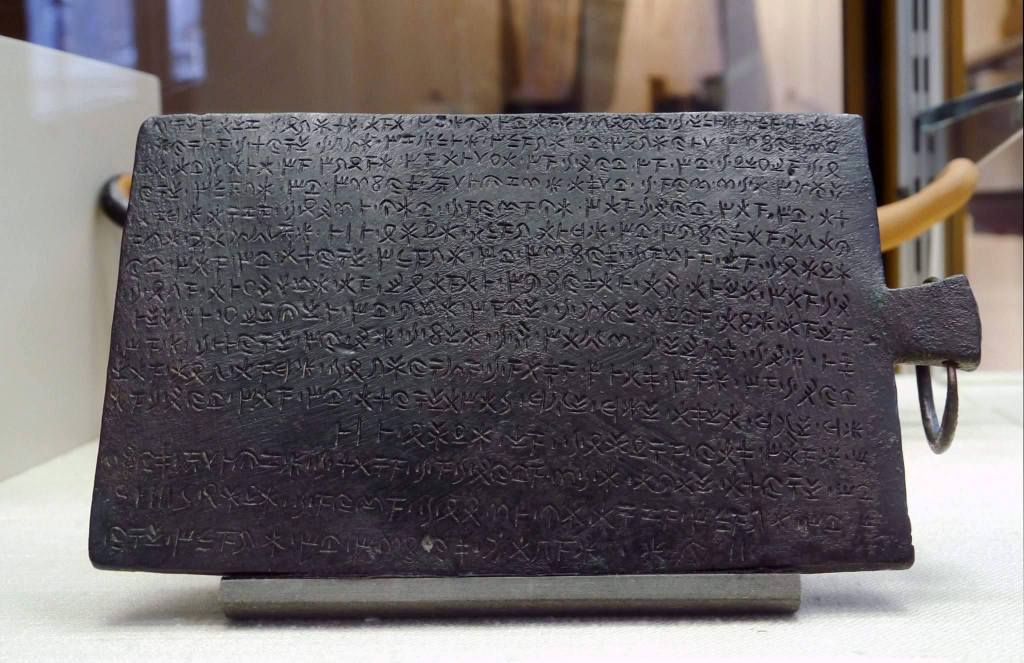
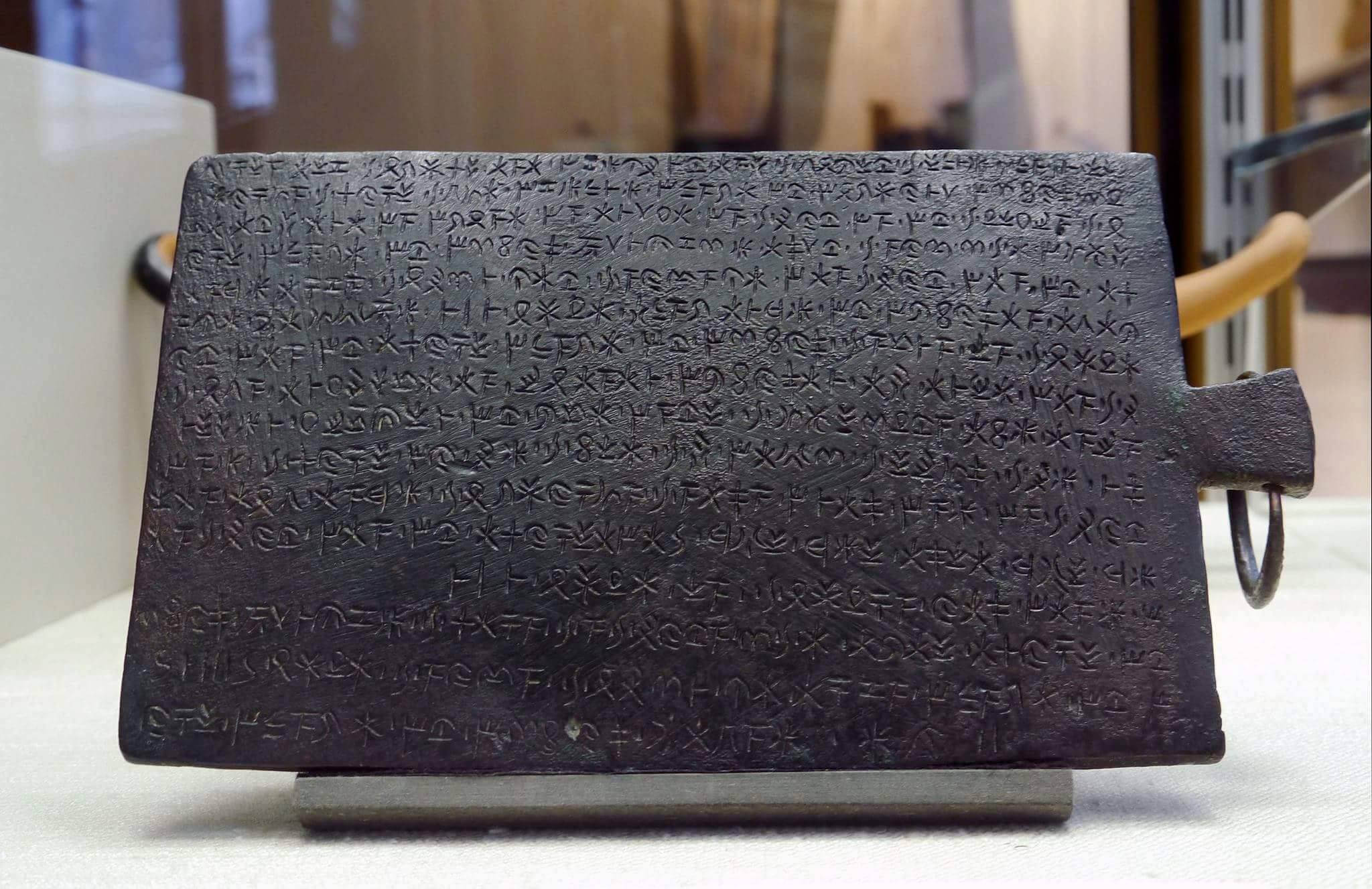
The bronze plaque is dated in the 5th BC (489-479BC: Cypro-Archaic to Cypro-Classical). It is also known as the Plaque of Onasilos (Πλάκα του Ονάσιλου).
It was found accidentally by a local farmer in 1850, at the Sanctuary of Athena on the west acropolis of the ancient city. The plaque was then bought, and ended up at the personal collection of French Honore d’Albert, Duc de Luynes. In 1862, it was given to the National Gallery of France, where is still located until today.
The plaque has two sides, and both have engraved inscriptions written in the Cypriot syllabary. It refers to the agreement of king Stasikypros with the local people of Idalion from the one side, and on the other side to the agreement of Onasilos and his brothers.
It is an important artefact due to the fact that it gives information about the political system and the socioeconomic conditions of the years of war between the ancient Kingdom of Idalion with the Phoenicians of city-kingdom of Kition.
It also gives information about the greek influence to the political system of the city, as well as for how the land was used and owned.
A major archaeological discovery has come to light in Larnaka (ancient Kition), where researchers have identified 23 previously unknown ships dating back more than 3,000 years, to the period traditionally associated with Homeric Cyprus. The find, announced by the Department of Antiquities,…
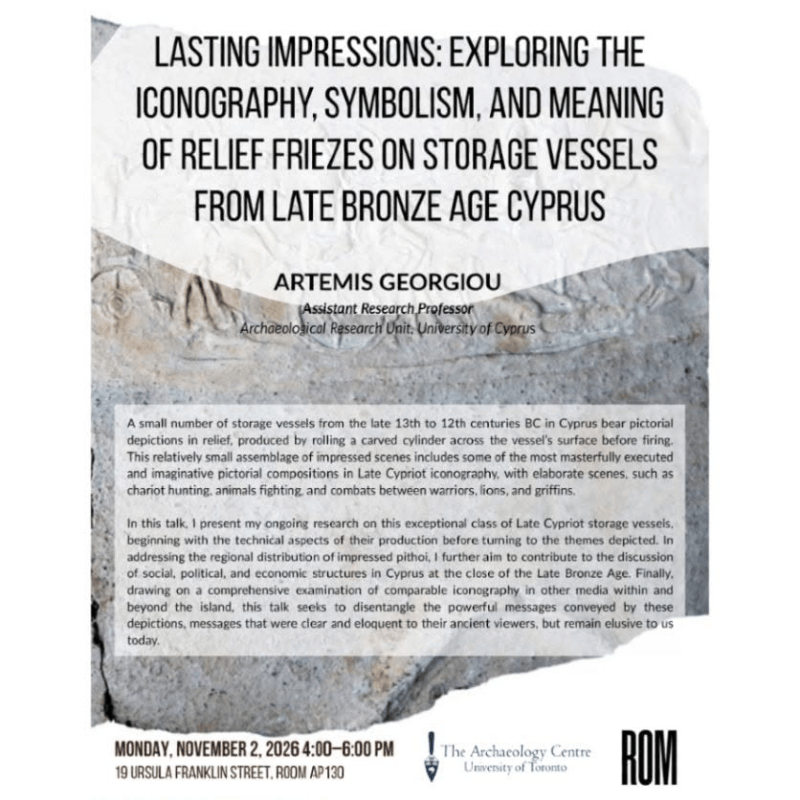
Dr Artemis Georgiou to Deliver Lecture at the University of Toronto on Late Bronze Age Cypriot Relief Friezes Dr Artemis Georgiou, project director of the COMPAS ERC Starting Grant, will be delivering an invited lecture at the Archaeology Centre, University of Toronto,…
The Department of Antiquities has announced the completion of the 2026 excavation season at Erimi‑Laonin tou Porakou, where the Italian Archaeological Mission of the Università degli Studi di Siena continued its long‑term investigation of the Middle Bronze Age settlement and cemetery. Fieldwork…
The French archaeological mission at Amathous—carried out by the French School at Athens, the French Ministry for Europe and Foreign Affairs, and Laboratoire HiSoMA, MOM, Lyon—completed its second excavation season on the West Terrace of the acropolis between 30 March and 24…
Another successful excavation season has been completed at the Sanctuary of Apollo at Frangissa. The Department of Antiquities of the Deputy Ministry of Culture announced that the joint team from the Universities of Frankfurt and Rostock has completed its 2025 campaign at…
The Department of Antiquities of the Deputy Ministry of Culture of the Republic of Cyprus has announced the completion of the 2025 excavation season carried out by the North Carolina State University team at the prehistoric cemetery of Makounta–Voules/Mersinoudia in the Pafos…