Towards the Pitsilia region, east of mount Olympos in Troodos Mountains, there is a small medieval chapel dedicated to Ayia Mavri. Hidden in the woods of mountainous Limassol, on the banks of Kryos River, the small chapel awakes senses of olden, forgotten times.
The Chapel is situated between the villages of Koilani and Pera Pedi in Limassol District. It is hidden in the mountains of Limassol, towards Troodos, in a fairy-tale location, at the west side of Kryos River, surrounded by the forest. The chapel is situated in an area dominated by plane trees with large tree trunks. Opposite the small chapel there is a 1200 years plane, known as the Agia Mavri plane (Platanus orientalis), a tree 35 metres high.
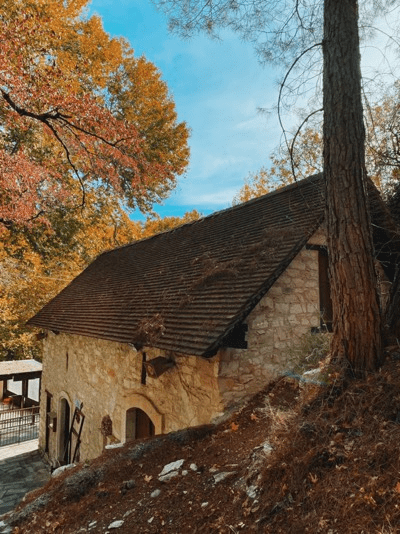
The small medieval chapel dates back to the 12th and according to tradition, it said that there used to be a small monastery housing monks on the spot where the chapel is built, however no remains have been uncovered so far.
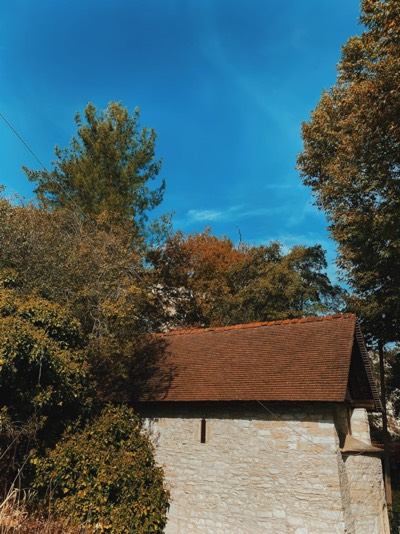
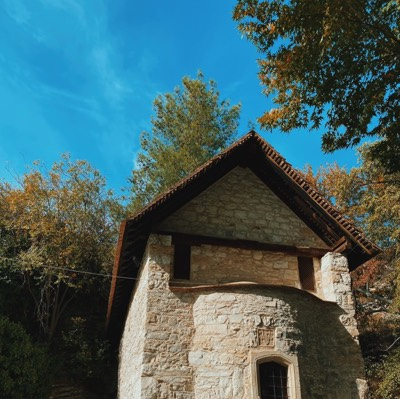
Ayia Mavri Chapel dates to the 12th century A.D and it is dedicated to Agia Mavri and Agios Timotheos. The small chapel is a fine example of the the churches of mountainous Limassol. The chapel is built on the edge of the vertical natural bedrock .Its architectural type follows the standards of the area which are based on the frank byzantine prototypes. It has a slopping roof covered with roof tiles, a characteristic feature of the mountainous Limassol. The walls are impressively high and they have small clerestories. According to tradition, it said that there used to be a small monastery housing monks on the spot where the chapel is built, however no remains have been uncovered so far.
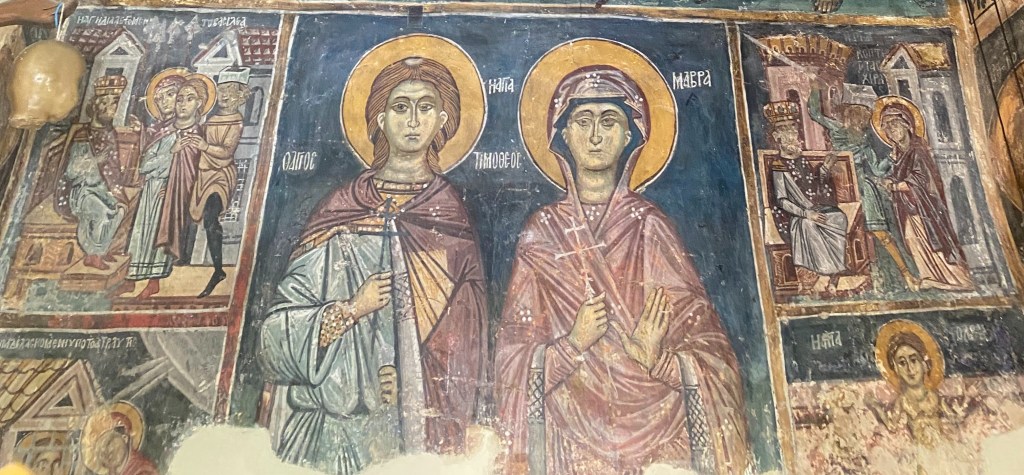
In its interior, the narthex at the back is raised, reached by ascending four large steps. On the floor of this elevated narthex there is a spring with holy water that flows outside through a marble tunnel. The walls are decorated with unique frescoes, illustrating the artistic styles of the 12th and the 15th centuries A.D. Among the most impressive frescoes are those of Ayia Mavri and Ayios Timotheos (Figure 2).
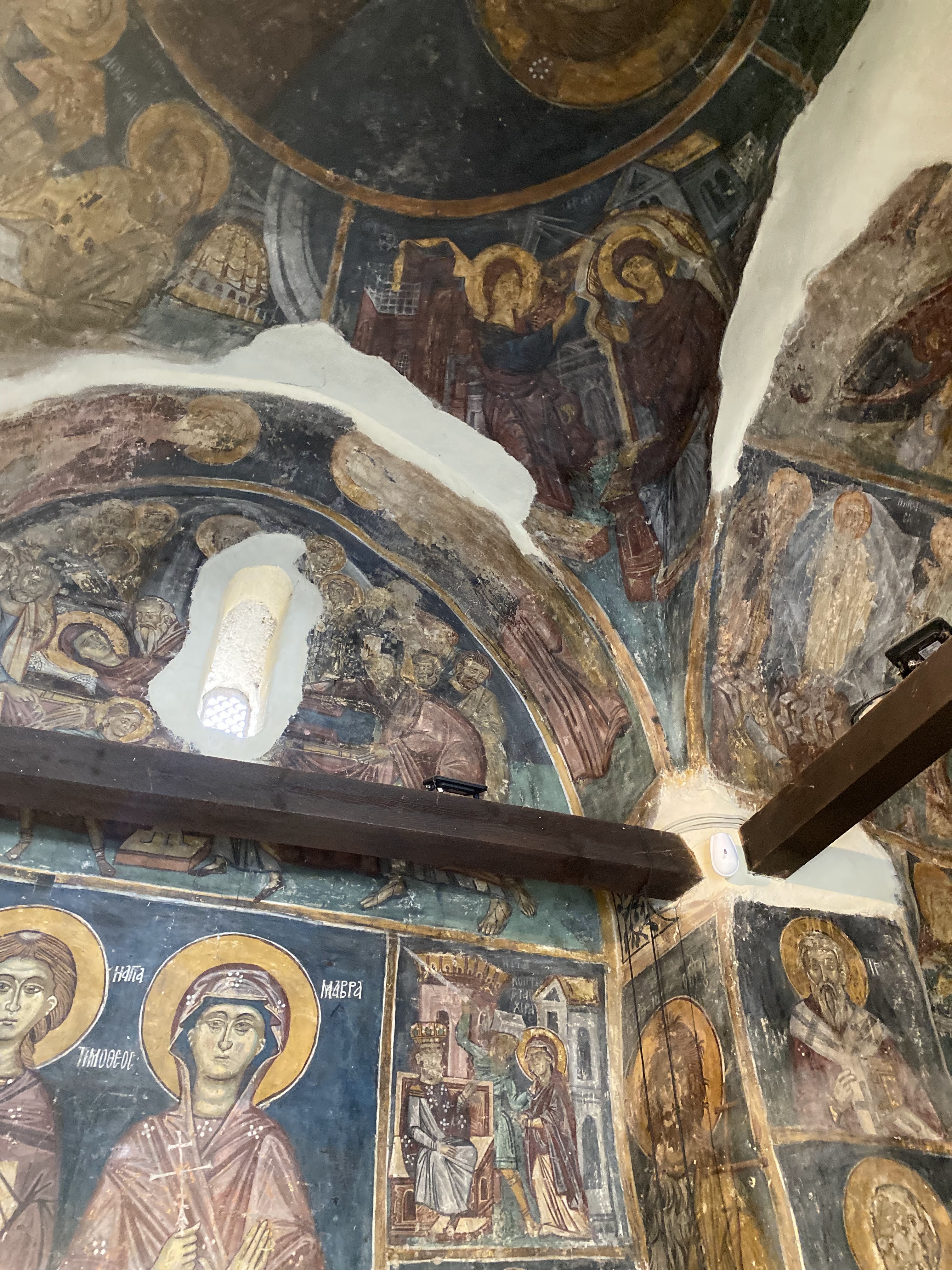
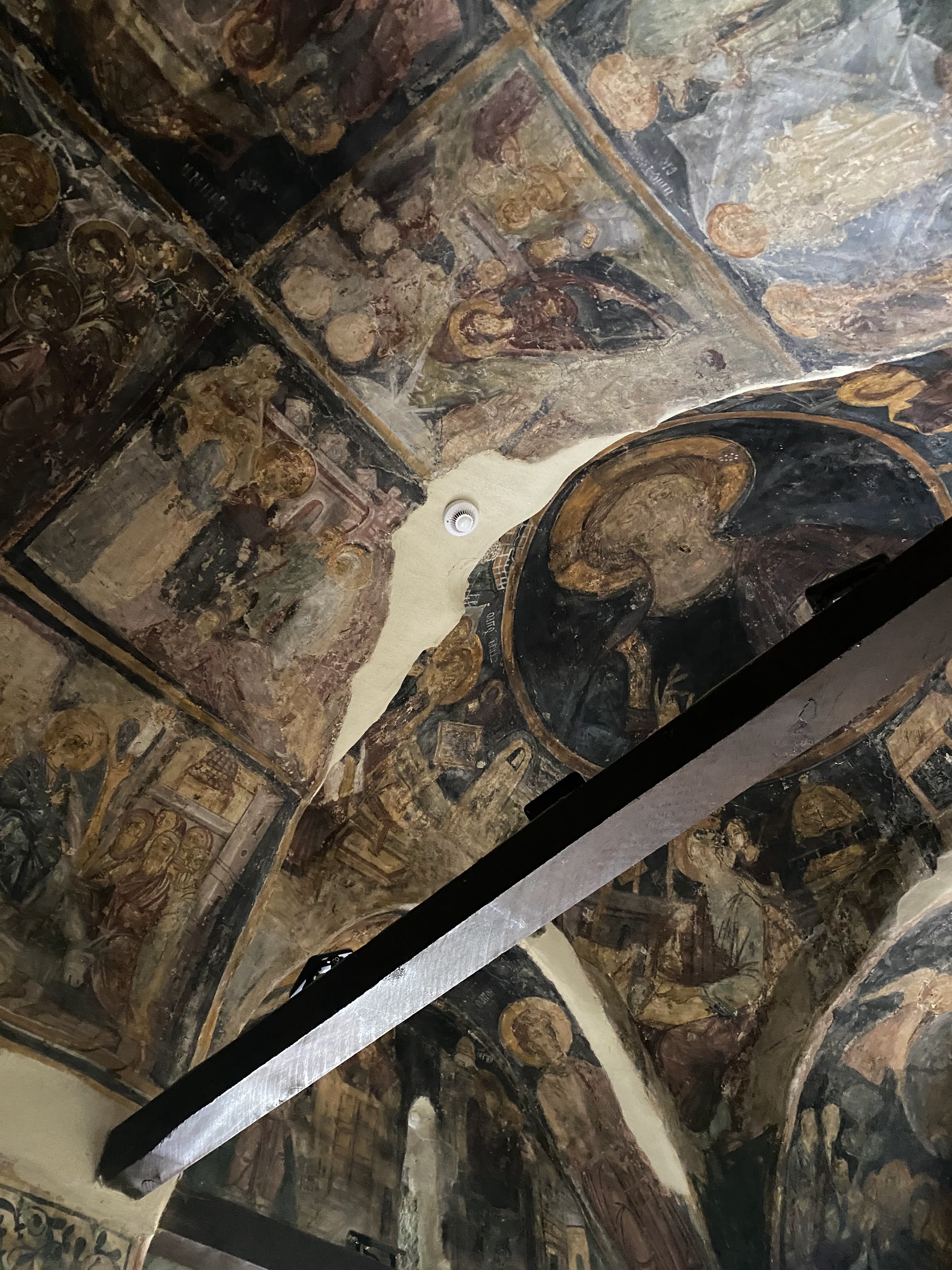
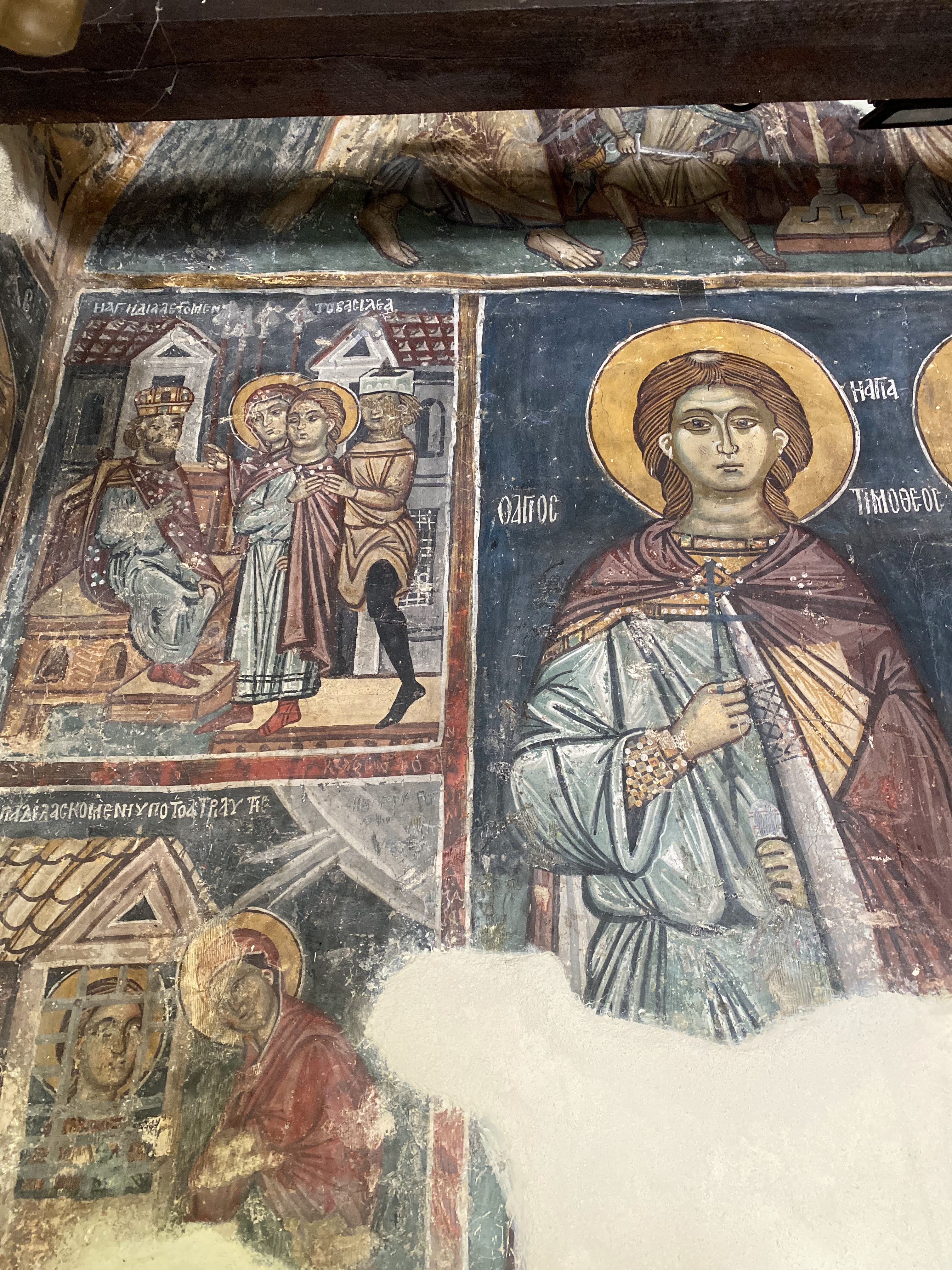
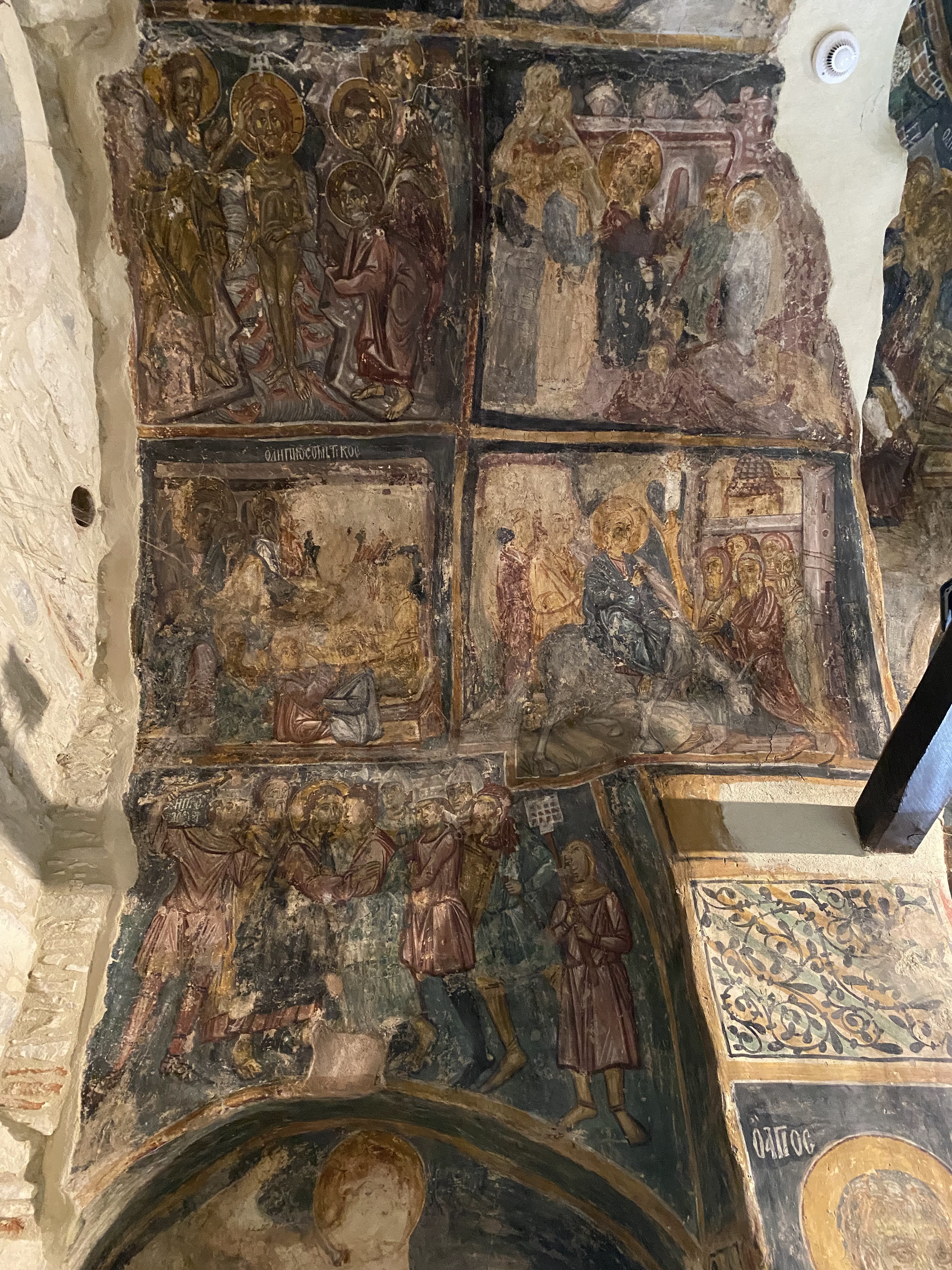
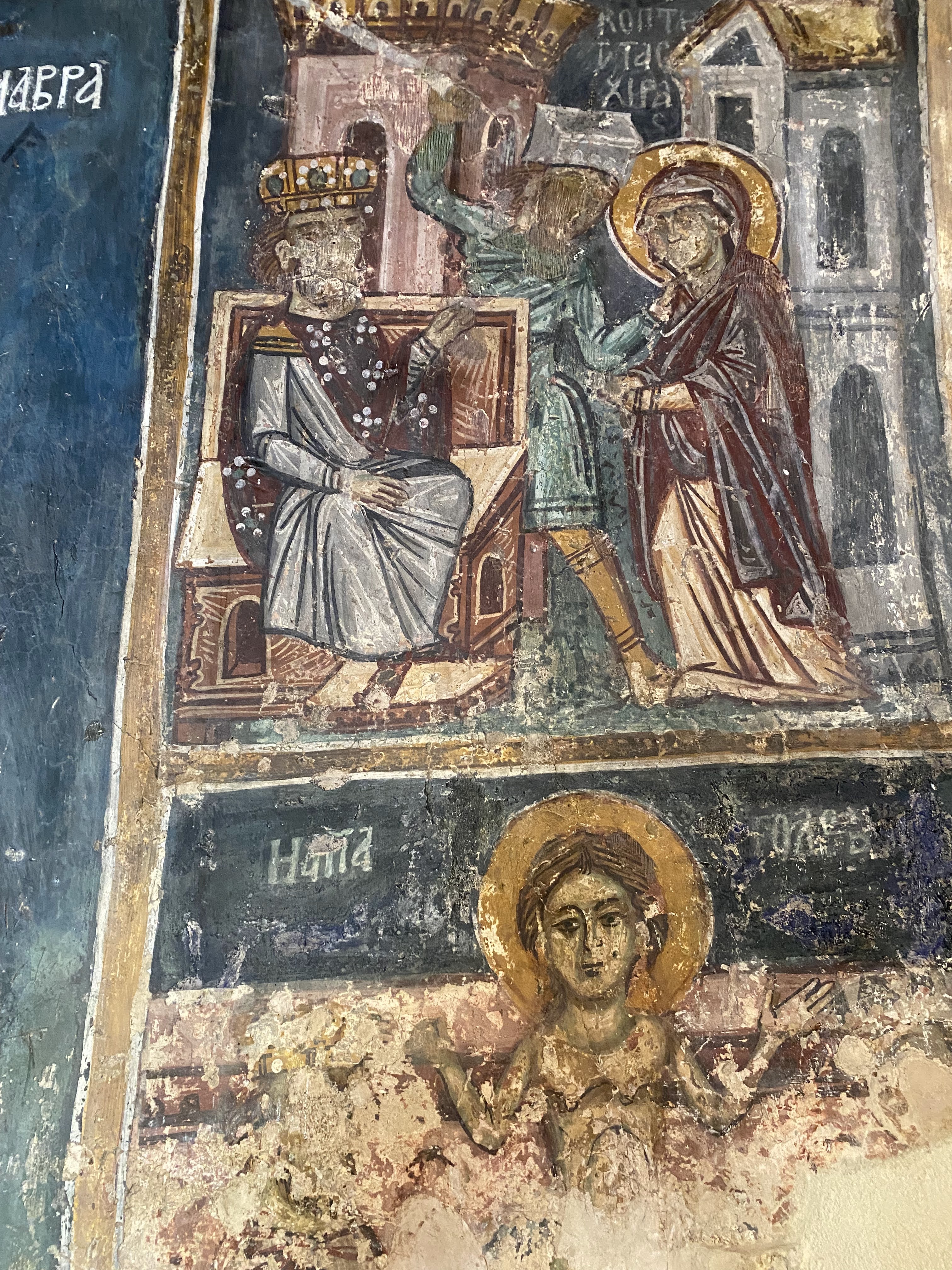
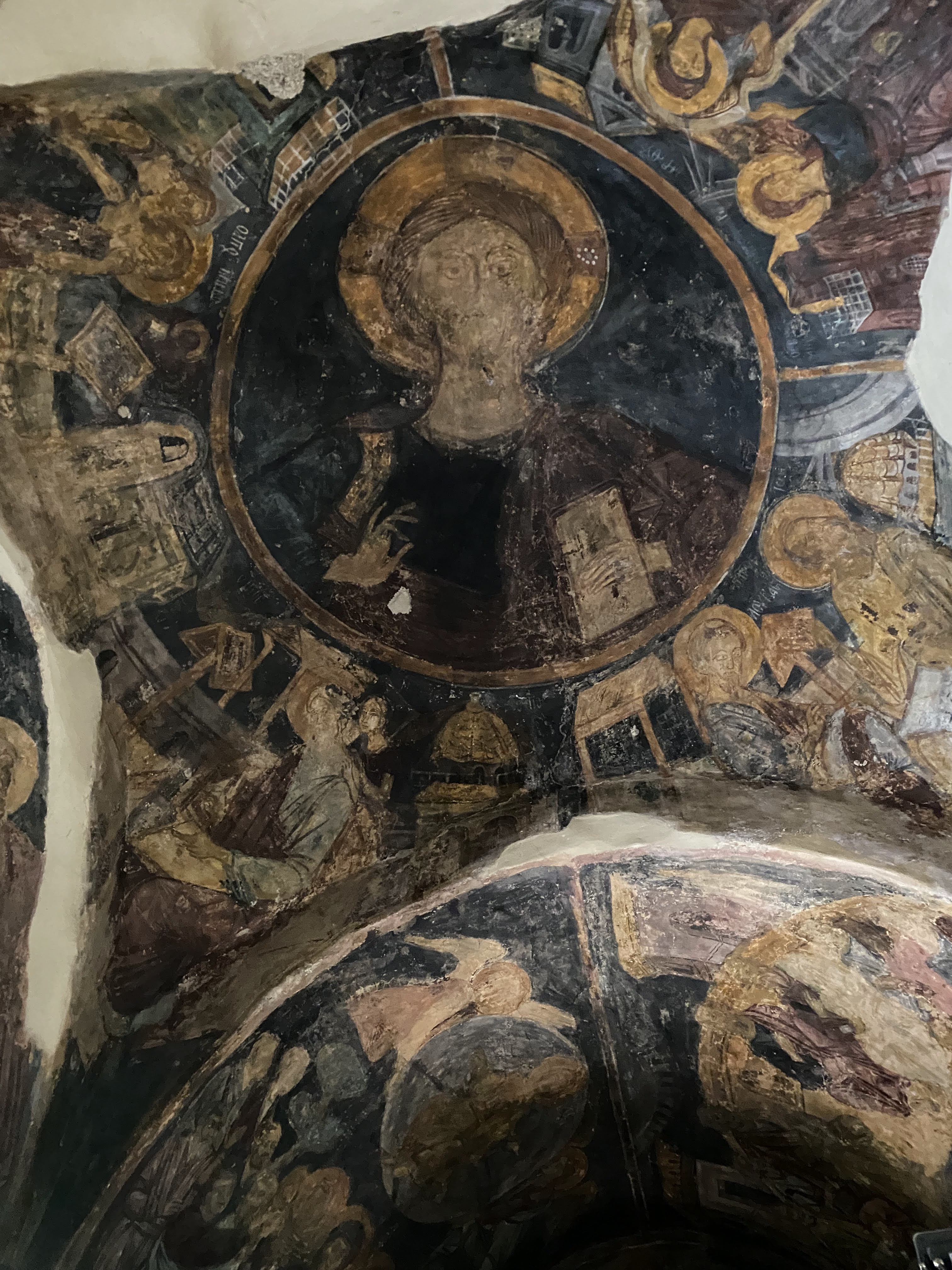
Figure 3. View of the interior of the chapel, wall-paintings, illustrating the artistic styles of the 12th and the 15th centuries A.D.
According to the official church tradition, Agios Timotheos was married to Agia Mavri and that the two were born into virtuous families in Thivaida, in Egypt. While Timotheos was fighting against idolatry, the two were arrested and martyred for refusing to change their beliefs.
There is a quite different story in the area though, as local tradition says, Saint Mary was born in a village nearby, either Koilani, Pera Pedi or Mandria. When her parents arranged for her to marry, she refused saying she wanted to devote herself to God and live a monastic life. The day before the wedding she walked into the hor oven where the wedding food was to be cooked, and while God spare her life, she was left with a blackened face (mavra in Greek means black). She then left her village and lived her remaining days in seclusion in the nearby hills.
Another tradition says that Agia Mavri lived with her parents in Koilani and she was in love with Timotheos. Their parents were not supportive of their love, and they wanted to marry her to someone that they had chosen. In the eve of her wedding she was cleaning the oven with lit wood and her face became black. The fact that she was not burned by the wood was a miracle. Then she went to meet Timotheos and the young couple decided to run away together. The villagers hunted them down and the couple hid in a cave which was miraculously open after Ayia Mavri hit the rock. At the spot where the rocks were opened a spring was created. Τhen another rock opened at Pera Pedi where an angel showed up and took the couple to heaven to save them.
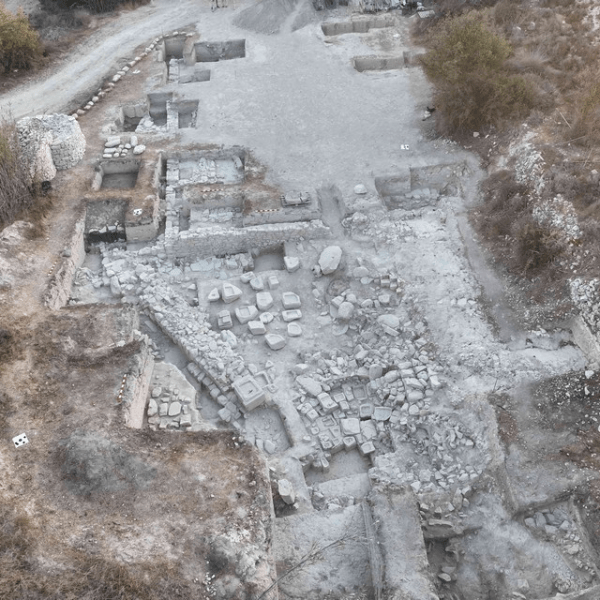
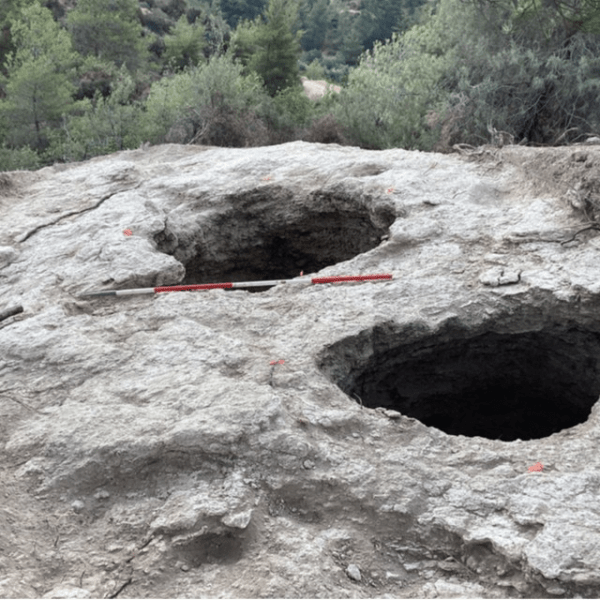
The are of Koilani provided archaeological evidence that dates earlier than the 12th century A.D., when the chapel was built. Archaeological aritfacts, mainly pottery, date back to the Roman period. The are is until today, famous for its wineries. Wine tradition of the region dates back to antiquity, according to archaeological research.
Research and Text: Cyprus Archaeology Team
Photos: Cyprus Archaeology Team
Bibliography & Source